A stain hits your carpet and your first instinct is to scrub it hard and fast. That instinct will make things worse. Most carpet stains spread and set deeper when you rub them. The right approach is almost always the opposite of what feels natural.
This guide covers the most common carpet stains — wine, pet accidents, coffee, and grease — with specific cleaning solutions for each one. You’ll also learn the correct blotting technique that actually lifts stains out instead of pushing them further in.
Key Takeaways
- Blot, never rub — rubbing spreads the stain and damages carpet fibers.
- Act within 5 minutes — fresh stains are dramatically easier to remove than dried ones.
- Cold water first — hot water sets protein-based stains like blood and pet urine permanently.
- Different stains need different solutions — one cleaner does not work on every stain type.
- Test before you treat — always test any cleaning solution on a hidden carpet area first.
- Some stains need a professional — large areas, deep set stains, and delicate fibers are best handled by pros.
What Is the Correct Way to Blot a Carpet Stain?
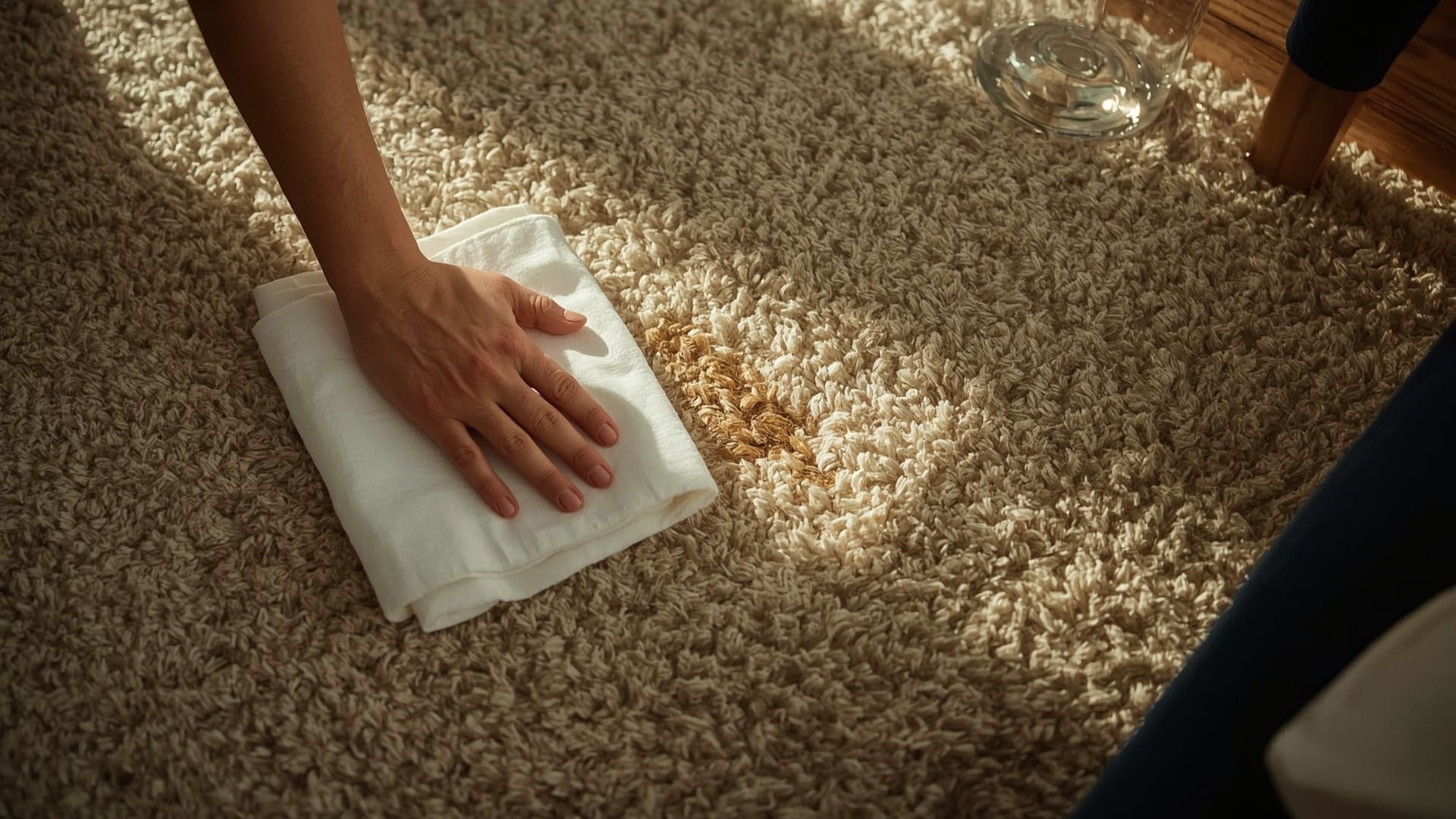
Quick Answer: Press a clean white cloth firmly onto the stain and lift straight up. Repeat from the outer edge toward the center. Never rub side to side. This lifts the stain out without spreading it or pushing it deeper into the carpet fibers.
The blotting technique sounds simple, but most people still get it wrong. They press down and drag across the stain, which spreads it outward and grinds it into the fibers.
The Right Blotting Method Step by Step
- Grab a clean white cloth or stack of paper towels.
- Press firmly down onto the stain and hold for 5 to 10 seconds.
- Lift straight up without dragging.
- Move to a fresh section of cloth for each press.
- Always work from the outer edge of the stain toward the center.
- Continue until no more color transfers to the cloth.
White cloth matters here. Colored cloths can transfer dye onto your carpet, which creates a second problem on top of the first one.
Should You Use Warm or Cold Water on a Stain?
Always start with cold water. Hot water bonds protein-based stains — like blood, egg, and pet urine — to the carpet fibers. Once that bond forms, the stain becomes nearly permanent. Cold water keeps the stain loose so your cleaning solution can break it apart.
How Do You Remove Red Wine from Carpet?
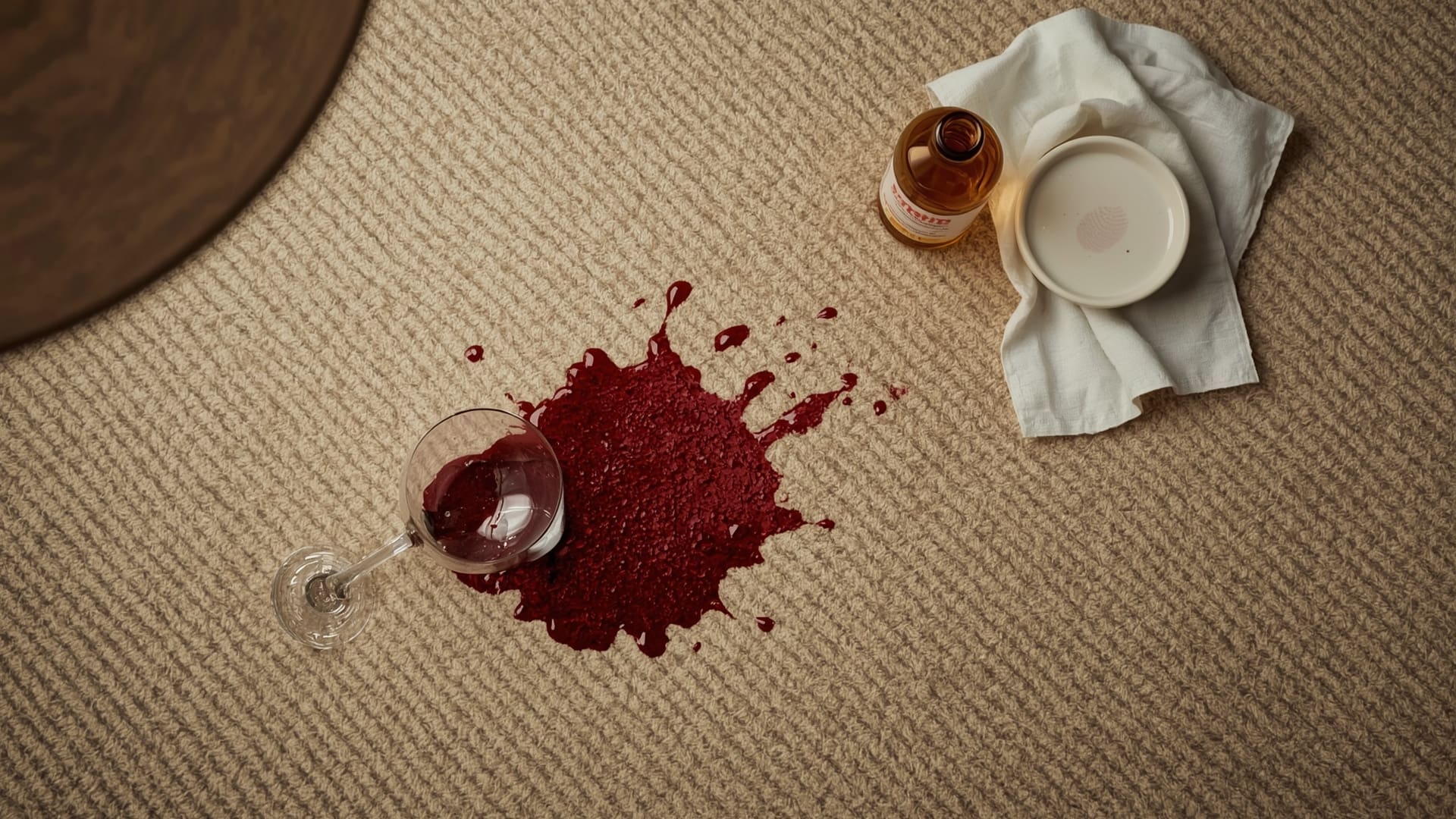
Quick Answer: Blot up as much wine as possible, then apply a mixture of one tablespoon dish soap, one tablespoon white vinegar, and two cups cold water. Blot repeatedly. Rinse with cold water. Act within 5 minutes for best results.
Red wine is a tannin-based stain. Tannins are natural compounds that bond to fabric fibers quickly, especially when heat or friction is applied. Speed is your biggest advantage here.
Red Wine Stain Removal Method
- Blot up as much liquid as possible immediately.
- Mix 1 tablespoon of dish soap, 1 tablespoon of white vinegar, and 2 cups of cold water.
- Apply small amounts of the solution to the stain using a cloth.
- Blot repeatedly, moving to clean cloth sections each time.
- Rinse the area with cold water and blot dry.
- If the stain remains, apply a small amount of hydrogen peroxide (3%) and blot again.
Use hydrogen peroxide carefully. It can lighten carpet color, especially on dark or synthetic fibers. Always test it on a hidden spot first.
Does Club Soda Actually Work on Wine Stains?
Club soda has a small amount of carbonation that can help lift a fresh stain to the surface. It is not a cleaning agent on its own. Use it as a first rinse, then follow with the dish soap and vinegar solution for full stain removal.
How Do You Get Pet Stains and Odor Out of Carpet?
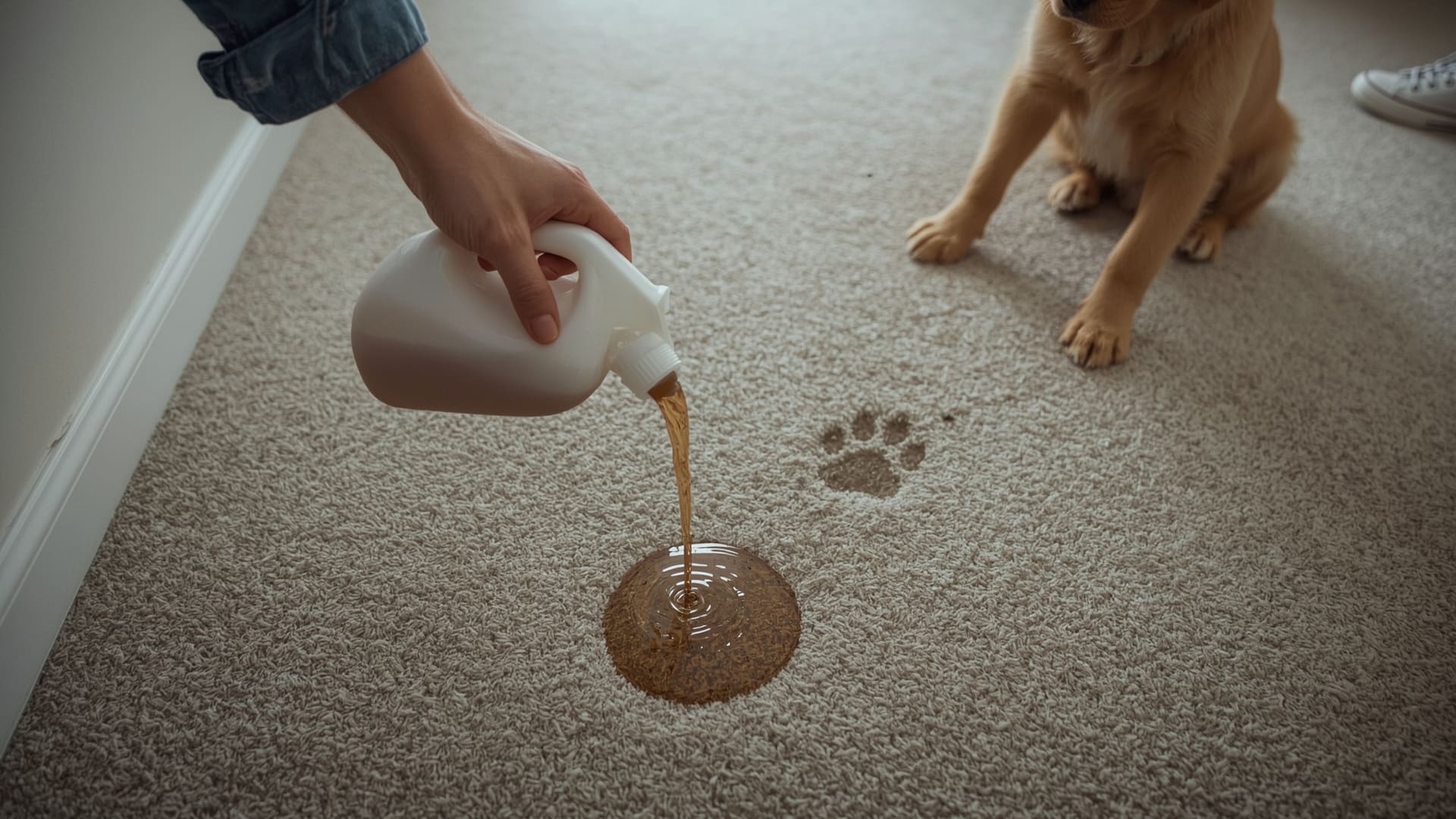
Quick Answer: Blot up the mess, then apply an enzymatic cleaner — a product that breaks down the proteins in urine and feces at the molecular level. Let it sit for 10 to 15 minutes, then blot dry. Plain soap and water will not remove the odor permanently.
Pet stains are a two-part problem. There is the visible stain and there is the odor. Most household cleaners handle the stain but leave behind uric acid crystals, which are the source of the smell. When humidity rises, those crystals reactivate and the odor returns.
What Is an Enzymatic Cleaner and Why Does It Work?
An enzymatic cleaner contains biological enzymes that digest the proteins in pet waste. Think of enzymes as microscopic scissors that cut apart the odor-causing molecules. Products like Nature’s Miracle, Rocco and Roxie, and Angry Orange are widely available and designed specifically for this purpose.
Pet Stain Removal Method
- If the stain is wet, blot up as much liquid as possible with paper towels. Press firmly and stand on the paper towels if needed.
- Rinse with cold water and blot again.
- Apply the enzymatic cleaner generously so it reaches the base of the carpet fibers — not just the surface.
- Cover with a damp cloth and let it sit for 10 to 15 minutes.
- Blot dry thoroughly.
- Allow the area to air dry completely before walking on it.
If the stain has already dried, re-wet the area with cold water before applying the enzymatic cleaner. Dried urine is harder to break down, so you may need two applications.
Carpet Stain Type Comparison: What Solution Works for Each
| Stain Type | Primary Cleaning Agent | Water Temperature | Soak/Dwell Time | Repeat Applications Needed |
|---|---|---|---|---|
| Red Wine | Dish soap + white vinegar solution | Cold | Immediate blotting | 1 to 2 |
| Pet Urine | Enzymatic cleaner | Cold | 10 to 15 minutes | 2 (for dried stains) |
| Coffee | Dish soap + cold water | Cold | Immediate blotting | 1 to 2 |
| Grease / Oil | Baking soda, then dish soap | Warm | 15 to 30 minutes (baking soda) | 1 to 3 |
| Blood | Cold salt water or hydrogen peroxide | Cold only | 5 minutes | 2 to 3 |
| Ink | Rubbing alcohol (isopropyl) | Cold | 2 to 3 minutes | 2 to 4 |
What Is the Best Way to Remove Coffee Stains from Carpet?
Quick Answer: Blot fresh coffee immediately, then mix one tablespoon of dish soap with two cups of cold water. Apply the solution with a cloth and blot until the stain lifts. Rinse with cold water and blot dry. Coffee with cream or sugar may need an extra pass.
Coffee stains fall into the tannin category, just like wine. Black coffee is the easiest to remove. Coffee with milk, cream, or sugar leaves behind an additional protein and sugar residue that needs more attention.
Coffee Stain Removal Method
- Blot up as much of the spill as possible before doing anything else.
- Mix 1 tablespoon of dish soap with 2 cups of cold water.
- Apply the solution to the stain with a clean cloth and blot firmly.
- Rinse with cold water and blot dry.
- For coffee with dairy, add a small amount of white vinegar to the solution to break down the protein residue.
- If a faint brown shadow remains after drying, apply 3% hydrogen peroxide and blot.
Why Does Coffee Leave a Ring After Cleaning?
The ring happens when moisture carries dissolved stain particles outward as the carpet dries. To prevent this, always blot from the outer edge inward. When you are done treating the stain, place a stack of paper towels over the area and weigh them down overnight to absorb residual moisture as it rises.
How Do You Remove Grease and Oil Stains from Carpet?
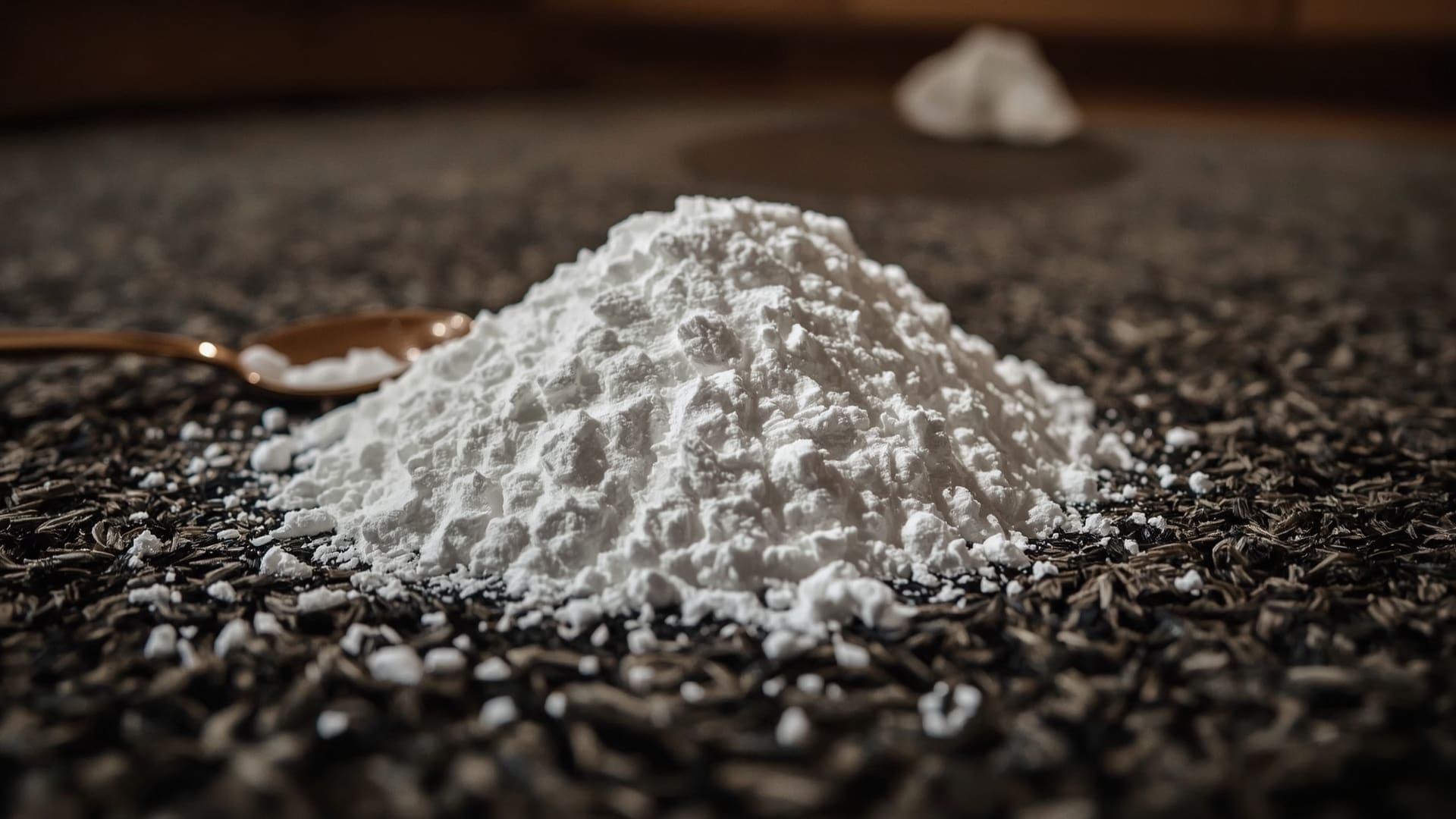
Quick Answer: Sprinkle baking soda over the grease stain and let it sit for 15 to 30 minutes to absorb the oil. Vacuum it up, then apply dish soap mixed with warm water and blot repeatedly. Grease needs a degreasing agent — vinegar alone will not cut through it.
Grease stains are hydrophobic, meaning they repel water. This is why plain water or vinegar does not work on them. You need a surfactant — a substance that breaks the bond between oil and carpet fibers. Dish soap is the most accessible surfactant you already have at home.
Grease and Oil Stain Removal Method
- Do not blot first — this pushes the grease deeper. Instead, use a spoon or dull knife to scrape off any solid grease from the surface.
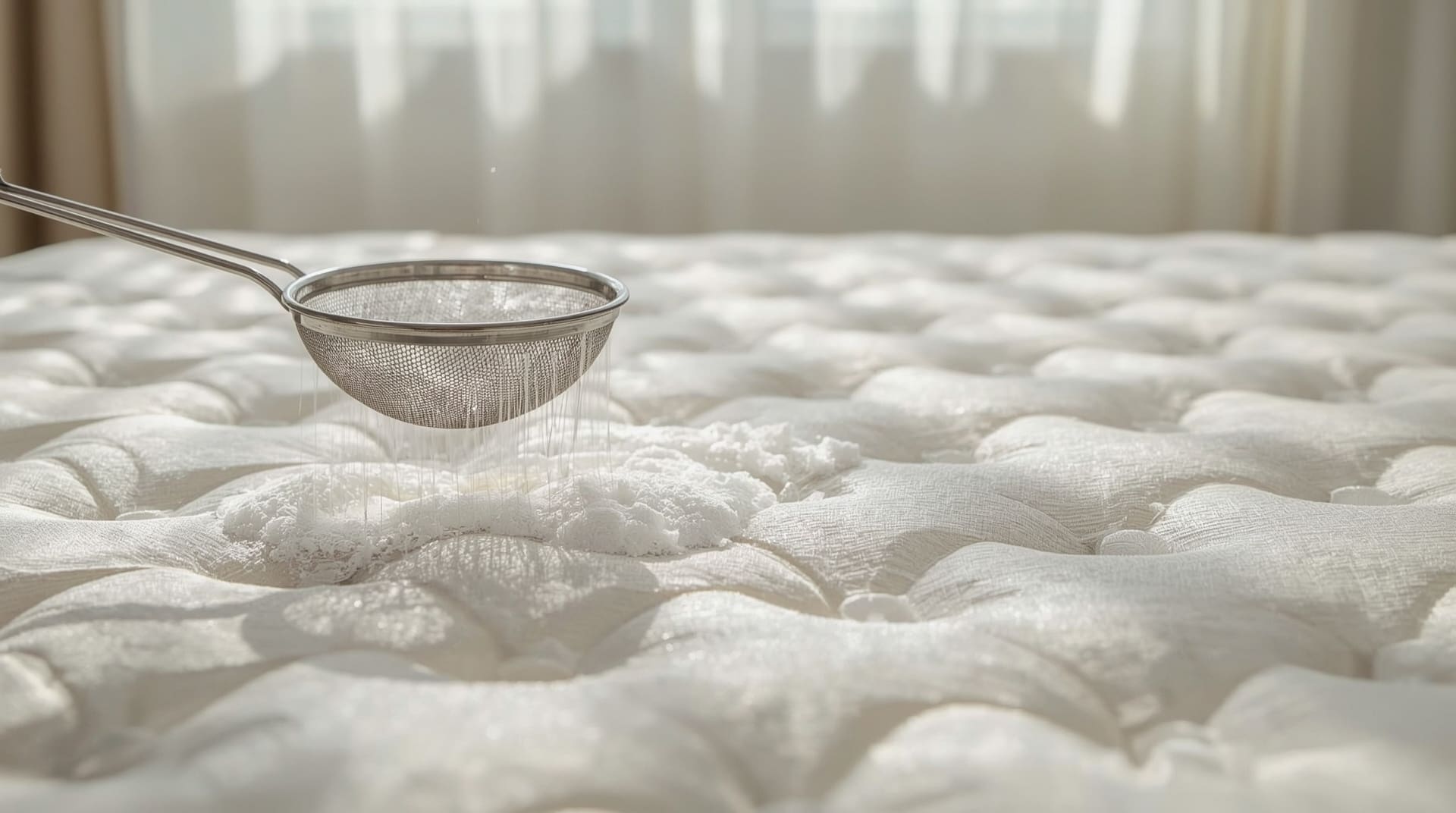
- Generously sprinkle baking soda over the entire stain.
- Let it sit for 15 to 30 minutes. The baking soda absorbs the oil.
- Vacuum up the baking soda thoroughly.
- Apply a few drops of dish soap directly to the stain.
- Add a small amount of warm water and work into the fibers with a soft brush in a circular motion — this is one of the few cases where gentle circular motion is acceptable rather than blotting.
- Blot with a clean cloth to lift the loosened grease.
- Rinse with warm water and blot dry.
Common Household Cleaning Agents: What They Do and Don’t Remove
| Cleaning Agent | Works Best On | Does Not Work On | Risk | Cost (Approximate) |
|---|---|---|---|---|
| Dish Soap + Water | Coffee, wine, food spills | Pet odor, deep grease | Residue buildup if not rinsed | $2 to $5 |
| White Vinegar + Water | Tannin stains, light odors | Grease, oil-based stains | Mild odor while wet | $1 to $3 |
| Baking Soda | Grease absorption, odor neutralizing | Colored stains on its own | Can leave powder residue | $1 to $2 |
| Hydrogen Peroxide (3%) | Blood, wine, coffee shadows | Grease, pet odor | Can bleach dark carpets | $1 to $3 |
| Enzymatic Cleaner | Pet urine and feces, biological stains | Grease, ink, tannins | Low — rinse well afterward | $10 to $20 |
| Rubbing Alcohol (Isopropyl) | Ink, nail polish, adhesive | Food, pet stains, tannins | Can dissolve some carpet backings | $2 to $5 |
How Do You Handle Dried or Set-In Carpet Stains?
Quick Answer: Re-hydrate the stain first by applying cold water and letting it sit for 5 minutes. This softens the dried residue so your cleaning solution can penetrate. Dried stains require more dwell time and often multiple cleaning passes compared to fresh ones.
Dried stains are harder to remove, but not impossible. The main challenge is that dry residue has bonded more firmly to the carpet fibers. Re-wetting breaks that bond just enough for the cleaning agent to get underneath it.
How to Re-Activate and Treat a Dried Stain
- Apply cold water to the stain until it is fully damp — not soaked, just wet.
- Let the water sit for 5 minutes to soften the residue.
- Gently agitate the area with a soft brush to loosen the dried material from the fibers.
- Apply your chosen cleaning solution based on the original stain type.
- Allow longer dwell time than you would for a fresh stain — at least double.
- Blot repeatedly with clean cloth sections.
- Repeat the full process a second time if the stain is still visible.
Stain Age vs. Removal Difficulty
| Stain Age | Removal Difficulty | Typical Cleaning Passes Needed | Professional Help Recommended? |
|---|---|---|---|
| Under 5 minutes | Low | 1 | No |
| 5 to 30 minutes | Low to moderate | 1 to 2 | No |
| 30 minutes to 2 hours | Moderate | 2 to 3 | Only for large areas |
| 2 to 24 hours | High | 3 to 5 | Consider it |
| Over 24 hours | Very high | 5 or more | Yes, strongly recommended |
Are There Carpet Stain Removal Mistakes That Make Stains Worse?
Quick Answer: Yes. The most damaging mistakes are rubbing the stain sideways, using hot water on protein stains, over-wetting the carpet, and using too much soap without rinsing. Each of these either spreads the stain, sets it deeper, or damages the carpet fibers themselves.
Most people make at least one of these mistakes before they learn the right method. The good news is that knowing what to avoid is almost as valuable as knowing what to do.
The 6 Most Common Carpet Cleaning Mistakes
- Rubbing instead of blotting — spreads the stain and breaks down carpet fibers.
- Using hot water on protein stains — permanently bonds blood, pet urine, and egg to the carpet.
- Over-wetting the carpet — soaks through to the padding and subfloor, causing mold and odor.
- Using too much soap — leaves a sticky residue that attracts dirt and creates a shadow stain.
- Not rinsing the cleaning solution out — residual soap or vinegar degrades carpet fibers over time.
- Skipping the patch test — some cleaners bleach or discolor certain carpet materials.
What Happens If You Over-Wet a Carpet?
Too much water forces moisture deep into the carpet padding. Padding dries much slower than the surface fibers. If it stays wet for more than 24 to 48 hours, mold and mildew begin to grow underneath. You will smell it before you see it. At that point, the problem is no longer just a stain — it is a moisture remediation issue.
When Should You Hire a Professional Carpet Cleaner?
Quick Answer: Hire a professional when the stain covers more than one square foot, has been set for over 24 hours, involves pet urine that has soaked into the padding, or when DIY attempts have not worked after two or three tries. Professionals use hot water extraction at 150 to 200°F, which penetrates deeper than any home method.
DIY methods work well for fresh, isolated stains. But there are situations where you genuinely need professional equipment and chemical-grade cleaning agents to get results.
Signs You Need a Professional Carpet Cleaning Service
- The stain covers more than a square foot of carpet.
- Pet urine has soaked through the carpet and into the padding — the smell will return if only the surface is treated.
- You have tried two or three DIY passes and the stain is still visible.
- The carpet is a delicate fiber like wool, silk, or hand-knotted material.
- You are preparing for a rental inspection or selling your home.
- There are multiple stains across a large area — this is more cost-effective to treat professionally in one session.
What Do Professional Carpet Cleaners Actually Do?
Most professional services use hot water extraction, sometimes called steam cleaning. This method injects hot water and a cleaning agent deep into the carpet fibers under high pressure, then immediately extracts the water along with the dissolved stain and residue. Water temperatures typically range from 150°F to 200°F. This level of heat and pressure is not replicable with home rental machines.
Professional Carpet Cleaning Cost Reference
| Service Type | Average Cost (2026) | Coverage Area | Best For |
|---|---|---|---|
| Spot stain treatment | $25 to $60 per stain | Individual stain areas | Isolated, stubborn stains |
| Single room steam clean | $75 to $150 | Up to 200 sq ft | One heavily used room |
| Whole-home carpet cleaning | $200 to $500 | 1,000 to 2,000 sq ft | Full-home refresh or pre-sale |
| Pet odor treatment + deodorizing | $50 to $150 per room | Per room with padding treatment | Multiple pet accidents over time |
| Wool or delicate fiber cleaning | $100 to $250 per room | Per room | High-value rugs, natural fibers |
How Do You Remove Stains from Wool or Delicate Carpet Fibers?
Quick Answer: Use only pH-neutral cleaners on wool carpet. Never use alkaline products like baking soda or alkaline dish soaps — they break down wool protein fibers. Blot gently, avoid scrubbing, and dry the area quickly to prevent shrinkage. When in doubt, call a specialist.
Wool is a protein fiber, which means it reacts to chemicals differently than synthetic carpets like nylon or polyester. The wrong cleaner can cause irreversible damage — color loss, fiber breakdown, or permanent shrinkage.
Carpet Fiber Type and Cleaning Compatibility
| Carpet Fiber | Safe Cleaners | Avoid | Stain Resistance | DIY Friendly? |
|---|---|---|---|---|
| Nylon | Dish soap, vinegar, enzymatic cleaners | Bleach (except diluted) | High (treated nylon) | Yes |
| Polyester | Dish soap, cold water, enzymatic cleaners | Heat, harsh solvents | Moderate | Yes |
| Wool | pH-neutral wool cleaner, cold water | Baking soda, alkaline soaps, bleach, hot water | Moderate (natural lanolin) | With caution |
| Olefin (Polypropylene) | Most cleaners, diluted bleach for mold | Oil-based solvents | High for water-based stains | Yes |
| Triexta (SmartStrand) | Dish soap, cold water, enzymatic cleaners | Harsh solvents | Very high (built-in) | Yes |
What Carpet Stain Prevention Steps Actually Work?
Quick Answer: Apply a carpet protector spray like Scotchgard after cleaning to create a barrier that slows stain absorption. Use entry mats to reduce tracked-in dirt, enforce a no-shoes policy in high-traffic areas, and blot spills within the first 60 seconds whenever possible.
Prevention is not glamorous, but it is dramatically cheaper than professional cleaning or carpet replacement. A few consistent habits keep most stains from ever becoming a real problem.
Carpet Protection Products and Their Effectiveness
- Carpet protector spray (e.g., Scotchgard) — coats fibers with a hydrophobic barrier, slowing absorption by 20 to 30 seconds. Needs reapplication every 6 to 12 months, or after professional cleaning.
- Entry mats — captures up to 80% of tracked-in soil and moisture before it reaches carpet areas.
- Area rugs over high-traffic carpet — protects the carpet underneath and can be washed separately.
- Regular vacuuming — removes abrasive particles that grind into fibers and dull appearance over time. Twice-weekly vacuuming in high-use areas is the standard recommendation.
Frequently Asked Questions About Carpet Stain Removal
Can You Use Baking Soda and Vinegar Together on a Carpet Stain?
Mixing baking soda and vinegar creates a fizzing reaction, but the two cancel each other out. Baking soda is a base and vinegar is an acid — combined, they produce mostly water and carbon dioxide. Apply them separately for better results: baking soda first to absorb grease or odor, then vinegar solution to treat the stain.
Will Steam Cleaning Remove Old Stains from Carpet?
Professional steam cleaning — also called hot water extraction — removes most old stains by penetrating deep into the fibers at high temperature and pressure. However, stains that have permanently bonded to the fibers, such as aged bleach marks or chemical burns, cannot be reversed by any cleaning method. Those require carpet patching or replacement.
How Do You Remove a Stain from Carpet Without a Store-Bought Cleaner?
For most food and beverage stains, a mixture of one tablespoon dish soap, one tablespoon white vinegar, and two cups of cold water works effectively. For grease, baking soda alone can absorb the oil before cleaning. For pet odors, a vinegar-and-water solution reduces smell but does not fully eliminate uric acid the way an enzymatic cleaner does.
Is It Possible to Remove a Set-In Pet Urine Stain Yourself?
Yes, but it requires an enzymatic cleaner — not soap or vinegar — and enough product to soak through to the carpet padding. Apply generously and let it dwell for at least 15 minutes. If the urine has soaked into the padding repeatedly over time, professional treatment or padding replacement is often the only permanent solution.
How Long Does Carpet Take to Dry After Stain Treatment?
Most treated areas dry in 2 to 6 hours with adequate airflow. Speed the process by blotting as much moisture out as possible after treatment, then placing a fan nearby. Avoid walking on the area while it is still wet. Carpet that stays damp for over 24 hours risks mold growth in the padding underneath.
Does Carpet Color Affect Which Cleaning Products You Can Use?
Yes. Hydrogen peroxide and products containing bleach or optical brighteners can lighten or discolor dark and richly colored carpets. Light-colored carpets are more forgiving but show stains more visibly. Always test any new cleaning solution on a small hidden area — like inside a closet — and wait 10 minutes before applying it to the stain.