
A dirty stovetop is one of the fastest ways a kitchen starts to feel grimy. Grease splatters, boiled-over sauces, and burnt-on residue build up quickly. The problem is that cleaning it the wrong way can scratch glass surfaces, damage burner grates, or leave behind streaks and residue.
This guide covers the right cleaning methods for every stovetop type. Whether you have a sleek glass cooktop, a ceramic surface, a gas range, or an electric coil stove, you will find a clear, step-by-step process that works without causing damage.
Key Takeaways
- Match your method to your stovetop type — glass, ceramic, gas, and electric surfaces each need a different approach to avoid damage.
- Baking soda and dish soap handle most everyday messes — for regular cleaning, you rarely need anything stronger.
- A razor scraper is safe for glass and ceramic — hold it at a 45-degree angle to lift burnt-on residue without scratching.
- Avoid abrasive scrubbers on smooth surfaces — steel wool and rough sponges cause permanent scratches on glass and ceramic cooktops.
- Clean gas burner grates in warm soapy water — soak them for 15 to 30 minutes to loosen grease before scrubbing.
- Clean while the surface is warm, not hot — a slightly warm stovetop loosens grime faster than a fully cooled one.
What Do You Need to Clean a Stovetop?

Quick Answer: For most stovetops, you need dish soap, baking soda, white vinegar, a microfiber cloth, and a non-scratch scrubbing pad. Glass and ceramic surfaces also benefit from a single-edge razor scraper to remove burnt-on residue safely.
Having the right supplies before you start saves time and prevents accidental damage. The tools you need vary slightly by stovetop type, but a basic cleaning kit covers most situations.
Basic Cleaning Kit for All Stovetop Types
- Dish soap (degreasing formula works best)
- Baking soda
- White vinegar
- Microfiber cloths or soft rags
- Non-scratch scrubbing pad
- Spray bottle
- Warm water
Additional Tools for Specific Stovetop Types
- Glass and ceramic cooktops: Single-edge razor scraper, ceramic cooktop cleaner (like Weiman or Cerama Bryte)
- Gas ranges: Stiff-bristle brush, toothbrush for crevices, degreaser spray
- Electric coil burners: Soft cloth, mild abrasive cleaner for drip pans
How Do You Clean a Glass Stovetop Without Scratching It?

Quick Answer: Sprinkle baking soda on the cooled glass surface, lay a warm damp towel over it for 10 to 15 minutes, then wipe clean with a soft cloth. Use a razor scraper at a 45-degree angle for stubborn burnt spots.
Glass cooktops look great, but they scratch easily. The key is using soft materials and giving your cleaning solution time to work before you scrub.
Step-by-Step: Glass Cooktop Cleaning Method
- Let the surface cool completely before applying anything. A hot glass surface can crack if cold liquid hits it.
- Wipe away loose debris with a dry microfiber cloth.
- Squirt a few drops of dish soap across the surface and spread it evenly.
- Sprinkle baking soda over the soapy surface. The mild abrasion helps lift residue without scratching.
- Lay a warm, damp towel over the entire cooktop. Leave it for 10 to 15 minutes.
- Scrub gently with the non-scratch pad in small circular motions.
- For burnt-on spots, hold a single-edge razor scraper at a 45-degree angle and push it under the residue. Never hold it perpendicular (90 degrees) to the surface.
- Wipe clean with a damp microfiber cloth, then buff dry to prevent streaks.
What Should You Avoid on Glass Cooktops?
- Steel wool or abrasive scrubbing pads
- Bleach-based cleaners
- Cleaning a hot surface
- Holding a razor scraper at a 90-degree angle
- Sliding cast iron pans across the surface (this causes deep scratches)
How Do You Clean a Ceramic Stovetop?
Quick Answer: Clean a ceramic cooktop the same way as glass: baking soda paste, a damp towel soak, and a non-scratch pad for scrubbing. For burnt-on residue, a ceramic cooktop cleaner like Weiman or Cerama Bryte works better than baking soda alone.
Ceramic cooktops are smooth glass-ceramic surfaces. They look similar to glass cooktops and follow the same basic cleaning rules. The main difference is that a dedicated ceramic cooktop cleaner can polish the surface and protect it from future buildup.
Using a Dedicated Ceramic Cooktop Cleaner
- Apply a small amount of ceramic cooktop cleaner directly to the surface.
- Spread it with a soft cloth or the applicator pad that comes with the product.
- Scrub gently in circular motions for 30 to 60 seconds on stained areas.
- Wipe away the residue with a clean damp cloth.
- Buff the surface dry for a streak-free finish.
These cleaners also leave a light protective coating that makes future spills easier to wipe off. Use them once a week if you cook frequently.
How Do You Clean a Gas Stovetop?

Quick Answer: Remove the grates and burner caps, soak them in warm soapy water for 15 to 30 minutes, then scrub with a stiff brush. Clean the stovetop surface with a degreaser spray and wipe with a damp cloth. Dry all parts fully before reassembling.
Gas stovetops have more parts than smooth cooktops. The grates, burner caps, and burner heads all need separate attention. Grease tends to collect in every crevice, so a soak is usually more effective than scrubbing dry.
Step-by-Step: Gas Stovetop Cleaning Method
- Make sure all burners are off and fully cooled.
- Remove the grates and burner caps. Place them in your sink or a large bucket of warm soapy water.
- Let them soak for 15 to 30 minutes. For heavy grease buildup, add a few tablespoons of baking soda to the soak water.
- Spray the stovetop surface with a degreaser (like Simple Green or a diluted dish soap solution). Let it sit for 3 to 5 minutes.
- Wipe the surface with a damp microfiber cloth. Use a toothbrush to get into the area around each burner head.
- Scrub the grates and burner caps with a stiff-bristle brush. A toothbrush works well for the small holes in the burner heads.
- Rinse all parts thoroughly and dry them completely with a towel before putting them back.
- Reassemble carefully and confirm each burner cap sits level before turning on any burners.
How Do You Unclog Gas Burner Holes?
If a flame burns unevenly or only ignites on one side, the small holes in the burner head are likely clogged with grease or food debris. Use a straightened paperclip or a toothpick to gently clear each hole. Never use a toothpick that could break off inside the hole. After clearing the holes, rinse the burner head and dry it fully before replacing it.
How Do You Clean an Electric Coil Stovetop?
Quick Answer: Remove the coil burners and drip pans. Clean the drip pans with baking soda and dish soap. Wipe down the coil burners with a damp cloth only — never submerge them in water. Wipe the stovetop surface with a degreaser and warm water.
Electric coil stovetops are low-maintenance compared to glass surfaces. The main trouble spots are the drip pans, which catch spills and build up burnt residue over time.
Step-by-Step: Electric Coil Stovetop Cleaning Method
- Turn off all burners and let them cool completely.
- Lift out the coil burners by tilting them up and pulling the connector end out of the socket.
- Remove the drip pans underneath each coil.
- Soak the drip pans in warm soapy water for 10 to 15 minutes.
- Scrub the drip pans with a non-scratch pad. For stubborn stains, apply a baking soda paste (baking soda mixed with a small amount of water) and let it sit for 20 minutes before scrubbing.
- Wipe the coil burners with a slightly damp cloth only. Do not submerge them or run them under water.
- Wipe the stovetop surface with a damp cloth and a small amount of dish soap.
- Dry all parts completely before reassembling.
How Do You Remove Burnt-On Grease From a Stovetop?
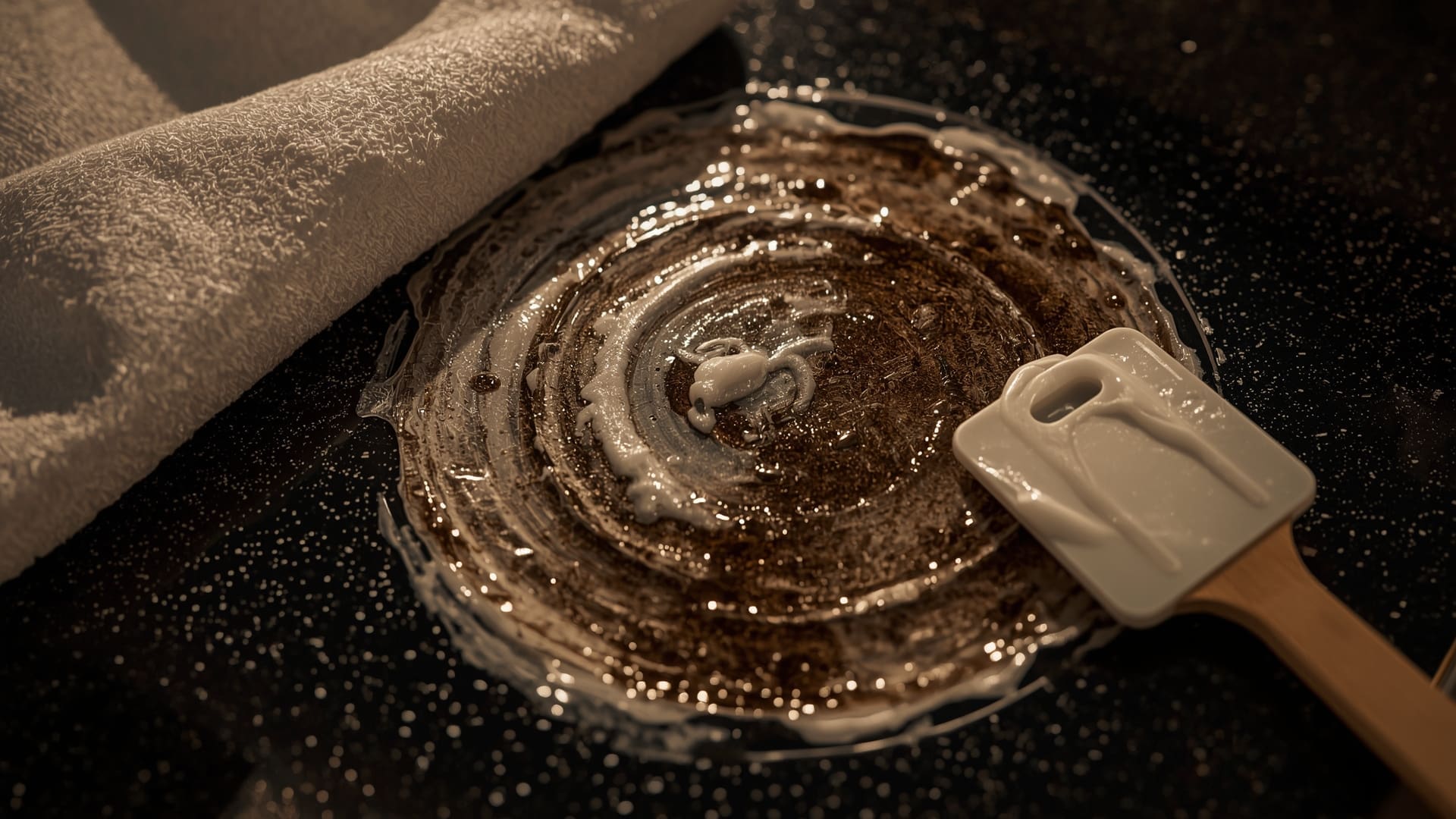
Quick Answer: Make a paste with baking soda and dish soap. Spread it over the burnt grease and cover with a damp warm cloth for 20 to 30 minutes. Scrub with a non-scratch pad or razor scraper. Repeat if needed for heavy buildup.
Burnt-on grease is the hardest thing to clean on any stovetop. The key is softening it before you scrub. Trying to scrape it off dry almost always causes scratches or just smears the grease around.
Baking Soda Degreasing Paste Method
- Mix 3 tablespoons of baking soda with 1 tablespoon of dish soap to form a thick paste.
- Spread the paste over the greasy area.
- Cover with a warm, damp cloth or paper towels.
- Leave it for 20 to 30 minutes (or longer for very heavy buildup).
- Scrub with a non-scratch pad. The grease should come off in pieces rather than smearing.
- Wipe clean with a damp cloth and repeat if any residue remains.
When Should You Use a Commercial Degreaser?
If baking soda paste does not fully remove the grease after two attempts, a commercial degreaser is your next step. Products like Simple Green, Zout, or a dedicated kitchen degreaser spray break down carbonized grease (grease that has been burnt into the surface repeatedly). Spray the product, leave it for the time listed on the label, then scrub and wipe clean. Always rinse the surface with plain water after using a commercial product.
How Do You Remove Burn Marks From a Stovetop?
Quick Answer: For glass and ceramic surfaces, a razor scraper removes surface burn marks. For deeper discoloration, a ceramic cooktop polish can reduce the appearance. Gas and electric stovetops may have permanent discoloration on enamel surfaces if marks are left too long.
Burn marks are different from grease. They happen when food residue gets cooked directly into the surface at high heat. On glass and ceramic cooktops, the residue bonds to the surface. On enamel (the coating on most gas and electric stovetops), burn marks can stain the surface permanently if not treated quickly.
Removing Burn Marks From Glass and Ceramic Cooktops
- Cool the surface completely.
- Apply a ceramic cooktop cleaner or a baking soda paste directly to the mark.
- Let it sit for 10 to 15 minutes.
- Use a razor scraper at a 45-degree angle to gently lift the burnt residue.
- Follow with a second application of cooktop cleaner and buff with a soft cloth.
Removing Burn Marks From Gas and Electric Stovetop Surfaces
- Apply a paste of baking soda and hydrogen peroxide (1:1 ratio) to the burn mark.
- Leave it for 30 minutes.
- Scrub with a non-scratch pad in small circles.
- Rinse thoroughly and dry.
For enamel surfaces, some discoloration may remain after deep cleaning. Light surface marks usually come off. Marks that have been burnt in repeatedly over months may be permanent.
What Cleaning Products Are Safe for Each Stovetop Type?
Quick Answer: Baking soda, dish soap, and white vinegar are safe for all stovetop types. Avoid bleach on enamel and ceramic, abrasive powders on glass, and any liquid cleaners on electric coil burners. Always check your stovetop manufacturer’s guidelines before using a new product.
| Stovetop Type | Safe Cleaners | Avoid | Recommended Product |
|---|---|---|---|
| Glass Cooktop | Baking soda, dish soap, white vinegar | Bleach, abrasive pads, steel wool | Cerama Bryte, Weiman Cooktop Cleaner |
| Ceramic Cooktop | Baking soda, dish soap, ceramic cooktop cleaner | Bleach, coarse scrubbers, ammonia | Weiman Ceramic Cooktop Cleaner |
| Gas Range (Grates) | Dish soap, baking soda, degreaser | Bleach on cast iron grates, oven cleaner on burner heads | Simple Green, Bar Keepers Friend |
| Gas Range (Surface) | Dish soap, white vinegar spray, baking soda paste | Abrasive powder on enamel, bleach | Method All-Purpose Spray |
| Electric Coil (Drip Pans) | Baking soda, dish soap, mild abrasive cleaner | Submerging coil burners in water, bleach | Bar Keepers Friend Powder |
How Often Should You Clean Your Stovetop?
Quick Answer: Wipe down your stovetop after every use to prevent buildup. Do a deeper clean with baking soda or a dedicated cleaner once a week. Clean gas grates and drip pans monthly, or sooner if spills occur during cooking.
Frequency depends on how often you cook and what you cook. Frying and high-heat cooking creates more grease splatter than simmering or boiling. A quick wipe-down after each use is the single most effective way to prevent the kind of buildup that requires heavy-duty cleaning.
Stovetop Cleaning Frequency Guide
| Task | Frequency | Why It Matters |
|---|---|---|
| Quick wipe-down after cooking | After every use | Prevents grease from bonding to the surface |
| Full surface cleaning with cleaner | Once per week | Removes accumulated grease and residue |
| Gas grate soak and scrub | Once per month | Prevents grease hardening into grate pores |
| Electric drip pan cleaning | Once per month | Prevents smoke and odor during future cooking |
| Deep degreasing treatment | Every 3 to 6 months | Removes carbonized grease not caught by regular cleaning |
How Do You Keep a Stovetop Clean Longer?
Quick Answer: Use lids while cooking to contain splatters, wipe spills immediately rather than waiting for them to cool, and clean while the surface is slightly warm. A quick 30-second wipe after each meal prevents 90% of deep-cleaning work.
Prevention is simpler than deep cleaning. A few small habits make a real difference in how often your stovetop needs serious attention.
Simple Habits That Reduce Stovetop Buildup
- Use pot lids when frying or boiling to keep splatter contained.
- Wipe spills immediately while the surface is still slightly warm. Fresh spills wipe off in seconds. Dried, baked-on spills take minutes.
- Use the right pan size for each burner. Pans smaller than the burner let heat and grease escape around the edges.
- Avoid overflowing pots by not filling them more than two-thirds full when boiling.
- Keep a damp cloth nearby during cooking so you can wipe splatters before they cool.
What Is the Difference Between Cleaning Glass and Ceramic Cooktops?
Quick Answer: Glass and ceramic cooktops are both smooth surfaces that require gentle cleaners and no abrasive scrubbing. The cleaning process is nearly identical. Ceramic cooktops may benefit more from a dedicated ceramic polish to restore shine and protect the surface finish.
Glass vs. Ceramic Cooktop Cleaning Comparison
| Attribute | Glass Cooktop | Ceramic Cooktop |
|---|---|---|
| Surface material | Tempered glass | Glass-ceramic composite |
| Scratch resistance | Low to moderate | Moderate |
| Best everyday cleaner | Dish soap and baking soda | Dish soap and baking soda |
| Best deep cleaner | Cerama Bryte, razor scraper | Weiman Ceramic Cooktop Cleaner |
| Handles razor scraper | Yes, at 45-degree angle | Yes, at 45-degree angle |
| Polish/protect product needed | Optional | Recommended weekly |
Is White Vinegar Safe to Use on a Stovetop?
Quick Answer: White vinegar is safe for glass, ceramic, and enamel stovetop surfaces. It cuts through grease and dissolves mineral deposits. Do not use it on cast iron grates because the acid can strip protective seasoning from the iron.
White vinegar is a mild acid. It works well as a spray-on degreaser for light to moderate grease. Mix equal parts white vinegar and water in a spray bottle, spritz the stovetop, let it sit for 2 to 3 minutes, then wipe clean with a microfiber cloth.
For glass and ceramic cooktops, a vinegar spray followed by a dry buff produces a streak-free finish. Skip the vinegar on cast iron grates. Use soapy water and a stiff brush instead.
Can You Use Baking Soda on All Stovetop Types?
Quick Answer: Yes. Baking soda is safe and effective on all stovetop types including glass, ceramic, gas, and electric surfaces. Its mild abrasion lifts grease and residue without scratching. It also neutralizes cooking odors that can linger on the stovetop surface.
Baking soda is one of the most versatile kitchen cleaners available. It works as a paste for scrubbing, a powder for soaking, and a deodorizer when left on surfaces for 15 to 30 minutes. Combined with dish soap, it handles most stovetop cleaning tasks without needing any commercial product.
EAV Table: Stovetop Cleaning Agents
| Cleaning Agent | Best Use | Contact Time | Safe Surfaces | Avoid On |
|---|---|---|---|---|
| Baking soda paste | Burnt grease, residue buildup | 15 to 30 minutes | All stovetop types | Nothing (universally safe) |
| White vinegar spray | Light grease, mineral deposits | 2 to 3 minutes | Glass, ceramic, enamel | Cast iron grates |
| Dish soap | Everyday grease and food residue | Immediate use | All stovetop types | Electric coil burners (direct contact) |
| Commercial degreaser | Carbonized grease, heavy buildup | Per label (typically 3 to 10 minutes) | Enamel, grates, surface panels | Glass cooktops (unless labeled safe) |
| Ceramic cooktop cleaner | Burn marks, surface polish | 1 to 2 minutes of scrubbing | Glass, ceramic | Gas grates, electric coil burners |
Frequently Asked Questions
Can I use oven cleaner on my stovetop grates?
You can use oven cleaner on cast iron or porcelain-coated grates, but follow the product label carefully. Oven cleaner contains lye (sodium hydroxide), which is a strong base that strips baked-on grease. Rinse grates very thoroughly after use. Do not use oven cleaner on burner heads or the stovetop surface itself.
Why does my glass cooktop still look cloudy after cleaning?
Cloudiness on glass cooktops usually comes from mineral deposits left by hard water or soap residue that was not fully rinsed. Spray the surface with white vinegar, let it sit for 2 to 3 minutes, then wipe dry with a clean microfiber cloth. A ceramic cooktop polish can restore shine after the cloudiness is removed.
How do I clean under the stovetop surface on a gas range?
Most gas ranges have a hinged top panel that lifts up like a car hood. Check your range manual to confirm yours works this way. With the burners off and the surface cool, lift the panel and wipe the interior with a damp cloth and dish soap. Avoid getting water near any wiring or igniter components.
Is it safe to put gas burner grates in the dishwasher?
Some grates are dishwasher-safe, but most cast iron grates are not. The dishwasher strips the protective coating from cast iron and can cause rust. Check your range manual first. If your grates are porcelain-coated, a short gentle cycle is usually fine. When in doubt, hand-wash with warm soapy water and a stiff brush.
What causes yellow or brown staining on a white enamel stovetop?
Yellow and brown staining on enamel surfaces comes from cooking oils that have oxidized over time. This type of stain is harder to remove than fresh grease. A paste of baking soda and hydrogen peroxide left on the stain for 30 minutes, followed by scrubbing with a non-scratch pad, lifts most of it. Heavy staining from years of buildup may not fully come out.
Can I use rubbing alcohol to clean a glass cooktop?
Yes. Rubbing alcohol (isopropyl alcohol, 70% concentration) is safe for glass and ceramic cooktops. It evaporates quickly and leaves no residue. It works especially well for removing sticky residue or fingerprints. Apply it to a microfiber cloth rather than spraying directly onto the surface.


