
A deep clean isn’t the same as a quick wipe-down. Deep cleaning your oven means removing months (or years) of baked-on grease, carbonized food, and sticky residue that regular cleaning can’t touch. The result? An oven that heats more evenly, smells better, and doesn’t smoke every time you roast vegetables at 425°F.
Whether you prefer a natural approach with baking soda and vinegar or want faster results from a commercial oven cleaner, this guide walks you through every step. You’ll learn how to clean the interior walls, oven racks, glass door, and even the heating elements without damaging anything.
Key Takeaways
- Baking soda paste is the safest deep cleaning method — mix it with water, spread it inside the oven, and let it sit 12 hours to dissolve baked-on grease without harsh fumes.
- Commercial oven cleaners work faster but require ventilation — products containing sodium hydroxide (lye) cut through carbonized food in 20-30 minutes but need gloves and open windows.
- Oven racks need separate treatment — soak them in hot water with dish soap or a dryer sheet overnight for the easiest grime removal.
- The self-clean cycle isn’t a substitute for manual deep cleaning — it reaches 800-900°F and burns food to ash, but it can produce fumes, warp door gaskets, and blow fuses.
- Clean the oven door glass from both sides — grease drips between the glass panes, and you can access the gap by removing the door or the bottom panel.
- Deep clean every 3-6 months — more often if you roast meats, bake frequently, or notice smoke or odors during preheating.
What Supplies Do You Need to Deep Clean an Oven?

Quick Answer: You need baking soda, white vinegar, dish soap, a spray bottle, rubber gloves, a plastic scraper, microfiber cloths, and an old toothbrush. For tougher jobs, grab a commercial oven cleaner like Easy-Off. These supplies cost under $15 total.
Gathering everything before you start saves time. You won’t need to pause mid-scrub to hunt for a sponge. Here’s your complete supply list.
Supplies for Natural Cleaning
- Baking soda (one full box, about 16 oz)
- White distilled vinegar (16 oz in a spray bottle)
- Dish soap (any grease-cutting formula)
- Rubber or nitrile gloves
- Plastic scraper or old credit card
- Microfiber cloths or old towels (3-4)
- Old toothbrush for corners and crevices
- Large garbage bag or bathtub for rack soaking
Supplies for Commercial Cleaning
- Commercial oven cleaner (Easy-Off, Zep, or Krud Kutter)
- Heavy-duty rubber gloves
- Safety glasses (sodium hydroxide can splash)
- Newspaper or plastic sheeting for floor protection
- Non-scratch scouring pads
- Damp cloths for wiping residue
How Do You Deep Clean an Oven With Baking Soda and Vinegar?
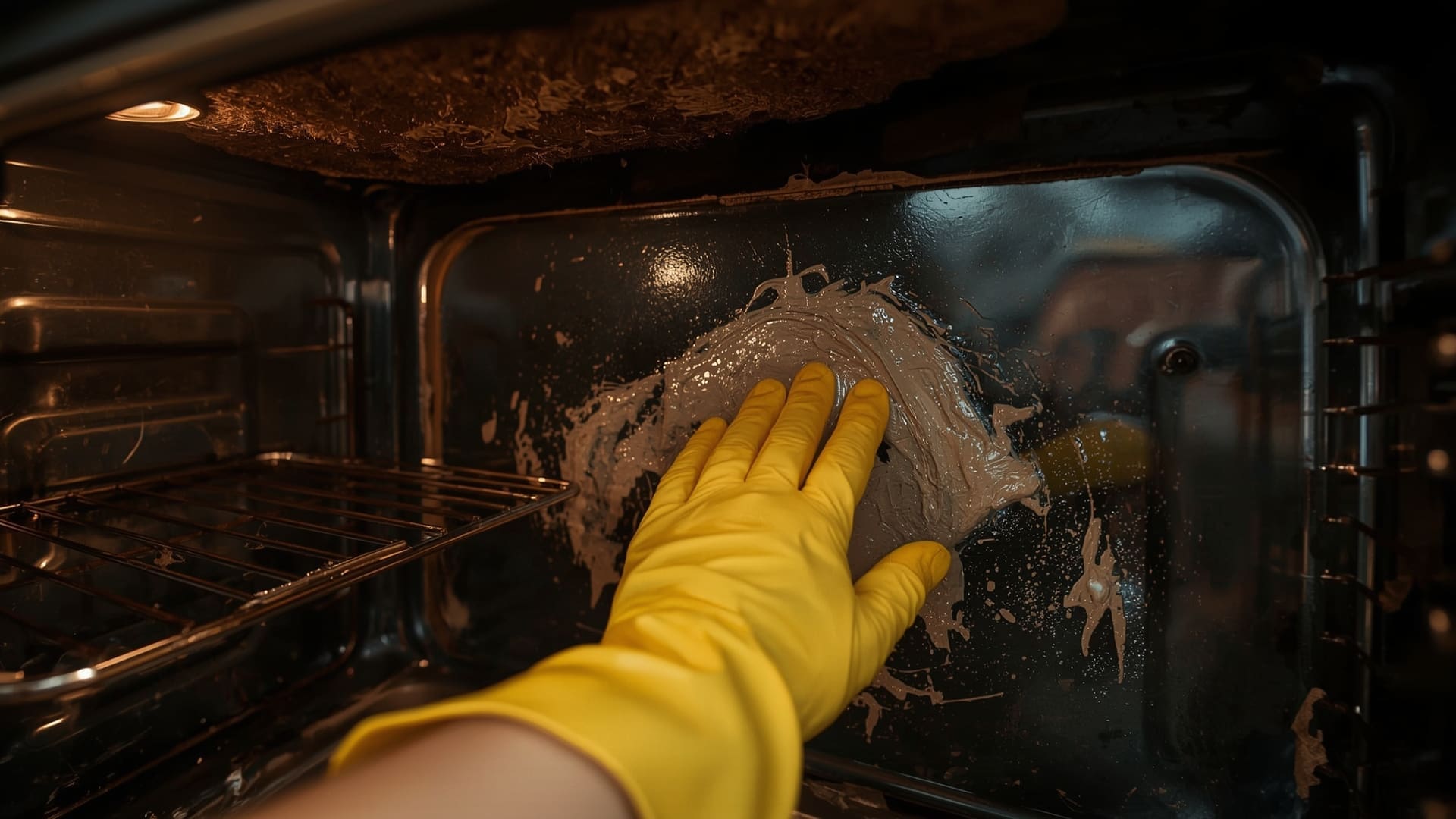
Quick Answer: Make a paste with ½ cup baking soda and 3 tablespoons of water. Spread it over the oven interior, avoiding heating elements. Wait 12 hours, then spray vinegar over the paste. Wipe everything out with damp cloths until no residue remains.
This is the most popular method because it works without toxic fumes. Baking soda is a mild abrasive and alkaline cleaner. It breaks down grease through a chemical process called saponification, which turns fat into a soapy substance you can wipe away.
Step 1: Remove Everything From the Oven
Pull out the racks, thermometer, pizza stone, and anything else inside. Set them aside for separate cleaning. Remove any large, loose food debris by hand or with a dry cloth.
Step 2: Make the Baking Soda Paste
Mix ½ cup of baking soda with 2-3 tablespoons of water in a small bowl. Stir until you get a spreadable paste. It should be thick enough to cling to vertical surfaces without dripping. Add water one teaspoon at a time if it’s too dry.
Step 3: Coat the Oven Interior
Put on your gloves. Spread the paste over every interior surface: the back wall, side walls, floor, ceiling, and door interior. Use your fingers or a silicone spatula. Avoid bare metal heating elements and the gas igniter if you have a gas oven.
Pay extra attention to areas with heavy grease buildup. Apply a thicker layer there. The paste will turn brown as it reacts with grime. That’s normal.
Step 4: Wait 12 Hours
Close the oven door and let the paste sit overnight. Twelve hours is the sweet spot. The alkaline baking soda needs time to break down carbonized food and grease. You can leave it for up to 24 hours for extremely dirty ovens.
Step 5: Spray Vinegar and Wipe Clean
Fill a spray bottle with white vinegar. Open the oven and spray generously over the dried baking soda paste. It will foam and fizz. This reaction loosens the remaining residue.
Wipe everything out with damp microfiber cloths. Rinse the cloth frequently. Use a plastic scraper for stubborn spots. Use an old toothbrush for corners where the walls meet the floor. Keep wiping until no white residue remains.
Step 6: Do a Final Wipe-Down
Dampen a clean cloth with plain water and wipe every surface one more time. This removes any leftover vinegar or baking soda. Check for streaks on the glass door. Dry with a clean towel.
How Do You Clean an Oven With Commercial Oven Cleaner?
Quick Answer: Spray commercial oven cleaner (like Easy-Off Heavy Duty) on cold oven surfaces, close the door, and wait 20-30 minutes. The sodium hydroxide dissolves baked-on grease chemically. Wipe everything out with damp cloths, then rinse surfaces to remove chemical residue.
Commercial cleaners are faster than baking soda, but they come with trade-offs. Most contain sodium hydroxide (lye), which is a strong caustic base. It dissolves organic matter on contact. That makes it incredibly effective against carbon buildup, but it also means you need proper ventilation and skin protection.
Safety Precautions
- Open a window or turn on the kitchen exhaust fan
- Wear heavy rubber gloves and safety glasses
- Keep children and pets out of the kitchen
- Never spray on a hot oven
- Protect your kitchen floor with newspaper or plastic
- Never mix oven cleaner with bleach or other chemicals
Application Steps
Remove racks from the oven. Shake the can well. Hold it 9-12 inches from the surface and spray in a sweeping motion. Coat the back wall, sides, floor, and door interior. Avoid spraying directly on heating elements, the oven light, or the thermostat probe.
Close the door and wait the time listed on the product label. Most products need 20-30 minutes for regular buildup and up to 2 hours for heavy grease. Wipe with damp cloths, rinsing often. Repeat if stubborn spots remain.
What Is the Best Way to Clean Oven Racks?

Quick Answer: Soak oven racks in a bathtub filled with hot water and ½ cup of dish soap for 4-12 hours. The soaking loosens baked-on grease so you can scrub it off with a non-scratch pad. For faster results, add ½ cup of baking soda to the soak.
Oven racks take the most abuse. Food drips on them, grease carbonizes at high temperatures, and they develop a dark, sticky coating over time. Soaking is the key. Scrubbing dry racks is exhausting and barely works.
Bathtub Soak Method
- Lay old towels in the bathtub to protect the surface from scratches.
- Place racks in the tub and fill with hot water until they’re submerged.
- Add ½ cup of dish soap and ½ cup of baking soda.
- Soak for at least 4 hours. Overnight is better.
- Scrub with a non-scratch scouring pad or stiff brush.
- Rinse thoroughly and dry before returning to the oven.
Dryer Sheet Trick
Place racks in the bathtub, cover with warm water, and lay 6-8 dryer sheets on top. The surfactants and fabric softeners in dryer sheets help dissolve grease. Soak overnight, then wipe the racks clean. This method works surprisingly well for moderate buildup.
Oven Rack Cleaning Method Comparison
| Method | Soak Time | Effectiveness | Cost | Best For |
|---|---|---|---|---|
| Dish soap + baking soda soak | 4-12 hours | High | Under $2 | Heavy grease buildup |
| Dryer sheet soak | 8-12 hours | Moderate | Under $1 | Moderate buildup |
| Commercial oven cleaner spray | 20-30 minutes | Very high | $5-$8 | Carbonized, stubborn grime |
| Ammonia in garbage bag | 8-12 hours | High | Under $3 | Heavy buildup, outdoor use |
| Bar Keepers Friend scrub | No soak needed | Moderate | $3-$5 | Light to moderate stains |
How Do You Clean the Oven Door Glass?
Quick Answer: Clean the inside glass with baking soda paste or a vinegar-water spray and a microfiber cloth. For grease trapped between the double glass panes, remove the oven door or access the gap through the bottom vent panel. A flexible cleaning wand helps reach inside.
The oven door has two or three layers of glass with space between them. Grease vapor enters through vent slots during cooking and condenses between the panes. That’s why the glass looks dirty even after you’ve cleaned both visible surfaces.
Cleaning the Interior Glass Surface
Make a paste with baking soda and water. Spread it over the inside glass. Wait 20-30 minutes. Wipe with a damp cloth. For streaks, spray white vinegar and buff dry. Avoid abrasive pads on glass. They can create micro-scratches that trap grease over time.
Cleaning Between the Glass Panes
Most oven doors have a removable bottom panel or can be fully removed from the hinges. Check your owner’s manual for instructions specific to your oven model. Once you access the gap, use a flexible cleaning wand wrapped in a damp microfiber cloth. Spray the cloth with vinegar first.
If your door doesn’t have easy access, you can sometimes slide a thin, damp cloth attached to a wire hanger through the bottom vent slots. Work it back and forth to wipe the inner panes.
Should You Use the Self-Clean Cycle Instead?
Quick Answer: The self-clean cycle heats your oven to 800-900°F for 2-4 hours, turning food residue to ash you can wipe out. It works, but it produces fumes, can damage door gaskets, and occasionally trips breakers or blows thermal fuses. Manual cleaning is safer for older ovens.
The self-clean feature sounds convenient. Lock the door, press a button, wait a few hours, and wipe out the ash. But appliance repair technicians say the self-clean cycle generates more service calls than almost any other oven feature.
Self-Clean Pros and Cons
| Attribute | Self-Clean Cycle | Manual Deep Clean |
|---|---|---|
| Temperature | 800-900°F | Room temperature (oven off) |
| Time required | 2-4 hours + 1-2 hours cooldown | 15-30 minutes active + 12 hours soak |
| Effectiveness | Turns residue to ash | Dissolves grease chemically |
| Fumes | Moderate to strong (carbon monoxide possible) | None (baking soda) or mild (commercial cleaner) |
| Risk of damage | Moderate (gaskets, fuses, electronic controls) | Very low |
| Cost | Energy cost: $0.50-$1.50 per cycle | Supplies cost: $2-$8 |
| Best for | Light to moderate buildup on newer ovens | Heavy buildup on any oven age |
If you do use self-clean, run it when you’ll be home and can open windows. Remove the racks first. High heat can discolor chrome racks and make them harder to slide. Never run the self-clean cycle the day before a big cooking event. If the door lock jams or a fuse blows, you’ll be without an oven.
How Do You Remove Baked-On Grease From the Oven Floor?

Quick Answer: Apply a thick layer of baking soda paste to the oven floor. Cover it with vinegar-soaked paper towels and let it sit 2-4 hours. The carbonized grease softens enough to scrape off with a plastic scraper. Repeat for layers that didn’t come off the first time.
The oven floor catches the worst of everything: dripping cheese, overflowing pie filling, spattering meat juices. This grime bakes at high heat repeatedly, turning into a hard, dark layer of carbon. It’s the toughest spot in the oven to clean.
Stubborn Spots That Won’t Budge
For grease that survives the baking soda treatment, try a paste made from Bar Keepers Friend (oxalic acid) and water. Apply it to the spot, let it sit 10 minutes, then scrub with a non-scratch pad. This works especially well on porcelain enamel interiors.
Never use steel wool or metal scrapers on enamel oven surfaces. They’ll scratch through the enamel coating and expose bare metal. That leads to rust and more staining over time. Plastic scrapers and non-scratch pads are always the safer choice.
How Do You Clean Oven Heating Elements Safely?
Quick Answer: Never apply cleaning products directly to heating elements. Instead, turn the oven on to 200°F for 15 minutes to burn off light residue. For the bake element on the oven floor, gently lift it and clean underneath. Only replace elements that are cracked, blistered, or not heating evenly.
Electric ovens have exposed heating elements on the top (broil) and bottom (bake). Gas ovens have a burner tube at the bottom, usually hidden under a cover plate. These components shouldn’t be scrubbed or sprayed.
If food has dripped directly onto a heating element, running the oven at low heat usually burns it off within 15 minutes. You’ll see a bit of smoke. That’s the food residue incinerating. Open a window and let it finish. Wipe around the element base with a damp cloth once the oven cools completely.
What Common Mistakes Should You Avoid When Deep Cleaning an Oven?
Quick Answer: Don’t spray cleaner on heating elements, don’t use steel wool on enamel surfaces, don’t clean a hot oven, and don’t skip rinsing after using commercial cleaners. Chemical residue left inside the oven creates fumes and odors the next time you cook.
Mistake 1: Cleaning a Hot or Warm Oven
Commercial oven cleaner on a hot surface produces dangerous fumes. Baking soda paste dries instantly and doesn’t penetrate. Always start with a completely cold oven.
Mistake 2: Using Abrasive Tools on Glass or Enamel
Steel wool, razor blades, and metal scrapers scratch enamel coatings and oven glass. Use plastic scrapers, non-scratch scouring pads, and microfiber cloths only.
Mistake 3: Forgetting to Rinse
Baking soda and commercial cleaners both leave residue. If you don’t rinse thoroughly, you’ll get a chemical taste in food or white residue flaking off oven walls. Wipe with clean, damp cloths at least twice after cleaning.
Mistake 4: Spraying Self-Clean Oven Interiors With Commercial Cleaner
Some self-cleaning ovens have a special coating that helps food residue burn off during the cycle. Commercial oven cleaners can damage this coating. Check your manual before using chemical cleaners.
Mistake 5: Ignoring the Oven Gasket
The rubber door gasket (the seal around the oven door frame) traps grease and crumbs. Wipe it with a damp cloth and mild dish soap. Never pull on it or use harsh chemicals. A damaged gasket lets heat escape and increases energy use by 10-20%.
How Often Should You Deep Clean Your Oven?
Quick Answer: Deep clean your oven every 3-6 months for typical home use. If you bake or roast weekly, clean every 2-3 months. Spot-clean spills as they happen to prevent carbon buildup. Wiping the interior with a damp cloth after every few uses extends the time between deep cleans.
Oven Cleaning Frequency by Usage
| Usage Level | Description | Deep Clean Frequency | Spot Clean Frequency |
|---|---|---|---|
| Light | Use oven 1-2 times per week, mostly reheating | Every 6 months | Monthly |
| Moderate | Use oven 3-4 times per week, baking and roasting | Every 3-4 months | Bi-weekly |
| Heavy | Daily use, frequent meat roasting, messy recipes | Every 2-3 months | Weekly |
| Commercial/shared kitchen | Multiple daily uses, high-volume cooking | Monthly | Daily |
Three warning signs tell you it’s time: smoke during preheating, a burning smell when the oven is empty, or visible grease buildup on the glass door. Don’t wait for all three. Any one of them means you’re overdue.
How Do You Clean Different Types of Ovens?
Quick Answer: Conventional electric and gas ovens use the same baking soda method. Convection ovens need their fan and fan cover cleaned too. Toaster ovens need the crumb tray emptied and interior wiped. Double ovens require cleaning each cavity separately. Each type has small differences worth knowing.
Gas Oven Specifics
Gas ovens have an igniter at the bottom that’s fragile and expensive to replace. Never touch it with a scraper or spray it with cleaner. The burner tube can be gently wiped with a damp cloth when the oven is cold. Check the gas ports (small holes on the burner) for food blockages. A toothpick can clear clogged ports.
Convection Oven Specifics
Convection ovens have a fan on the back wall that circulates hot air. Grease accumulates on the fan blades and the cover panel around it. Remove the fan cover (usually held by screws) and wipe the blades with a cloth dampened in soapy water. A greasy fan reduces airflow efficiency and creates uneven baking.
Toaster Oven Specifics
Unplug the toaster oven and let it cool. Remove the crumb tray, rack, and baking pan. Wash these in the sink with dish soap. Wipe the interior with a damp cloth dipped in a baking soda solution. Never submerge a toaster oven in water. The heating elements are close to everything, so be extra careful not to wet them.
Oven Type Cleaning Comparison
| Oven Type | Cleaning Method | Special Considerations | Average Deep Clean Time |
|---|---|---|---|
| Standard Electric | Baking soda paste or commercial cleaner | Avoid exposed bake/broil elements | 30 min active + 12 hr soak |
| Gas | Baking soda paste (preferred) | Protect igniter and gas ports | 30 min active + 12 hr soak |
| Convection | Baking soda paste + fan cleaning | Clean fan blades and cover separately | 40 min active + 12 hr soak |
| Self-Cleaning | Self-clean cycle or gentle manual clean | Check if chemical cleaners void coating | 3-5 hours (cycle) or 30 min + soak |
| Toaster Oven | Damp cloth + baking soda solution | Never submerge; elements are exposed | 15-20 minutes |
What Natural Alternatives Work Besides Baking Soda?
Quick Answer: Lemon juice, salt, cream of tartar, and hydrogen peroxide all work as natural oven cleaners. Lemon steam loosens light grease. A salt and baking soda scrub handles moderate buildup. Cream of tartar paste tackles discoloration on glass doors. None are as effective as baking soda for heavy carbonized grease.
Lemon Steam Method
Fill an oven-safe bowl with water and the juice of two lemons. Drop the lemon halves in. Heat the oven to 250°F and let the water steam for 30 minutes. The citric acid vapor softens grease. Turn off the oven, let it cool enough to touch, and wipe down the interior. This method works best for light, recent grease.
Salt for Fresh Spills
If something spills while the oven is hot, cover the spill with table salt immediately. The salt absorbs the liquid and prevents it from carbonizing. Once the oven cools, scrape up the salt and the spill comes with it. This is a preventive trick, not a deep cleaning method.
Hydrogen Peroxide and Baking Soda
Mix ¼ cup of baking soda with enough hydrogen peroxide (3% solution) to make a paste. This combination creates a mild oxidizing cleaner that works well on stainless steel oven interiors. Apply, wait 30 minutes, and wipe clean. It’s slightly more effective than baking soda and water alone for certain stain types.
How Do You Keep Your Oven Clean After a Deep Clean?
Quick Answer: Use oven liners or a sheet pan on the rack below your food to catch drips. Wipe spills immediately with a damp cloth. Place a shallow pan of water in the oven during roasting to reduce grease splatter. These habits extend the time between deep cleans from 3 months to 6 months or longer.
Preventive Strategies That Work
- Oven liners: Place a reusable, non-stick liner on the bottom rack (never on the oven floor in gas ovens). It catches drips and wipes clean. Cost: $8-$15 for a set of two.
- Sheet pan drip catcher: Place a rimmed baking sheet on the rack below whatever you’re cooking. Works for pies, casseroles, and roasts.
- Cover your food: Use a lid, foil tent, or roasting bag to contain splattering juices.
- Quick wipe after cooking: Once the oven cools to warm (not hot), wipe the interior with a damp cloth. This takes 60 seconds and prevents grease from hardening.
Stubborn carpet stains and baked-on oven grease have something in common: they’re exponentially harder to clean the longer you wait. Addressing spills when they’re fresh is always easier than scrubbing carbonized residue months later.
If you’re tackling a full kitchen deep clean, you might also want guidance on cleaning the inside of a microwave, how to clean a stovetop without scratching it, natural cleaning solutions for your kitchen, removing hard water stains from your bathroom, or cleaning walls without damaging the paint. A clean oven is just one part of a well-maintained kitchen.
Frequently Asked Questions
Can I use oven cleaner on a self-cleaning oven?
Most manufacturers advise against it. Self-cleaning ovens have a pyrolytic enamel coating that helps food residue burn off during the high-heat cycle. Chemical oven cleaners can degrade this coating. Check your owner’s manual first. If you must use a cleaner, stick with baking soda paste.
Is it safe to cook right after using oven cleaner?
Not immediately. Rinse all surfaces with clean water at least twice after using a commercial cleaner. Then run the oven empty at 300°F for 15 minutes to evaporate any remaining residue. If you still smell chemicals, wipe again and repeat the empty heat cycle.
Why does my oven smell bad after cleaning?
Leftover cleaner residue is the usual cause. Baking soda leaves a chalky film if not fully rinsed. Commercial cleaners leave chemical traces. Run the oven empty at 350°F for 20 minutes with a window open. The heat evaporates residue. If the smell persists, wipe down all surfaces again with plain water.
How do you clean an oven without baking soda or commercial cleaner?
Steam works for light buildup. Place a bowl of water with lemon juice in the oven at 250°F for 30 minutes. The steam softens grease for easy wiping. For heavier grime, make a paste with cream of tartar and water. It’s mildly abrasive and acidic enough to cut through moderate grease.
Can I put oven racks in the dishwasher?
You can, but most dishwashers won’t remove heavy baked-on grease effectively. The water temperature and detergent strength aren’t enough for carbonized food. The racks may also scratch your dishwasher interior. A bathtub soak with dish soap and baking soda delivers better results for a fraction of the effort.
How long does a full oven deep clean take from start to finish?
Active scrubbing time is about 30-45 minutes. The baking soda paste needs 12 hours to soak, and oven racks need 4-12 hours in a bathtub soak. Start the process in the evening, and you’ll finish the next morning. Total hands-on effort is under one hour for most ovens.


