Knowing how to clean a mattress is one of the most overlooked parts of keeping a healthy bedroom. You spend roughly a third of your life on your mattress, yet most people never clean it beyond swapping the sheets. Dust mites, sweat, dead skin cells, and the occasional spill build up fast, and they affect both your sleep quality and your health.
The good news is that a thorough mattress cleaning does not require expensive equipment or professional chemicals. With a few household supplies and the right technique, you can tackle mattress stain removal, deodorize your mattress, and cut down on allergens all in one afternoon. This guide walks you through every step.
Ready to learn more? If you want a professional to handle the deep cleaning in your home, explore our house cleaning services in Raleigh and let TruClean take care of the details.
What You Need Before You Start

Gathering your supplies before you begin saves time and keeps you from stopping mid-job. Most of these items are already in your home.
- Vacuum with upholstery attachment for removing surface debris and dust mites
- Baking soda to absorb moisture and neutralize odors
- White distilled vinegar in a spray bottle for stain treatment
- Dish soap or enzyme-based cleaner for protein-based stains like blood or urine
- Cold water and a clean white cloth or paper towels
- Hydrogen peroxide (3%) for tough set-in stains
- Essential oil (optional) to add a light fresh scent after deodorizing
Avoid hot water on most mattress stains. Heat sets protein stains permanently. Always use cold or lukewarm water unless a specific product instructs otherwise.
Step One: Strip the Bed and Vacuum Thoroughly
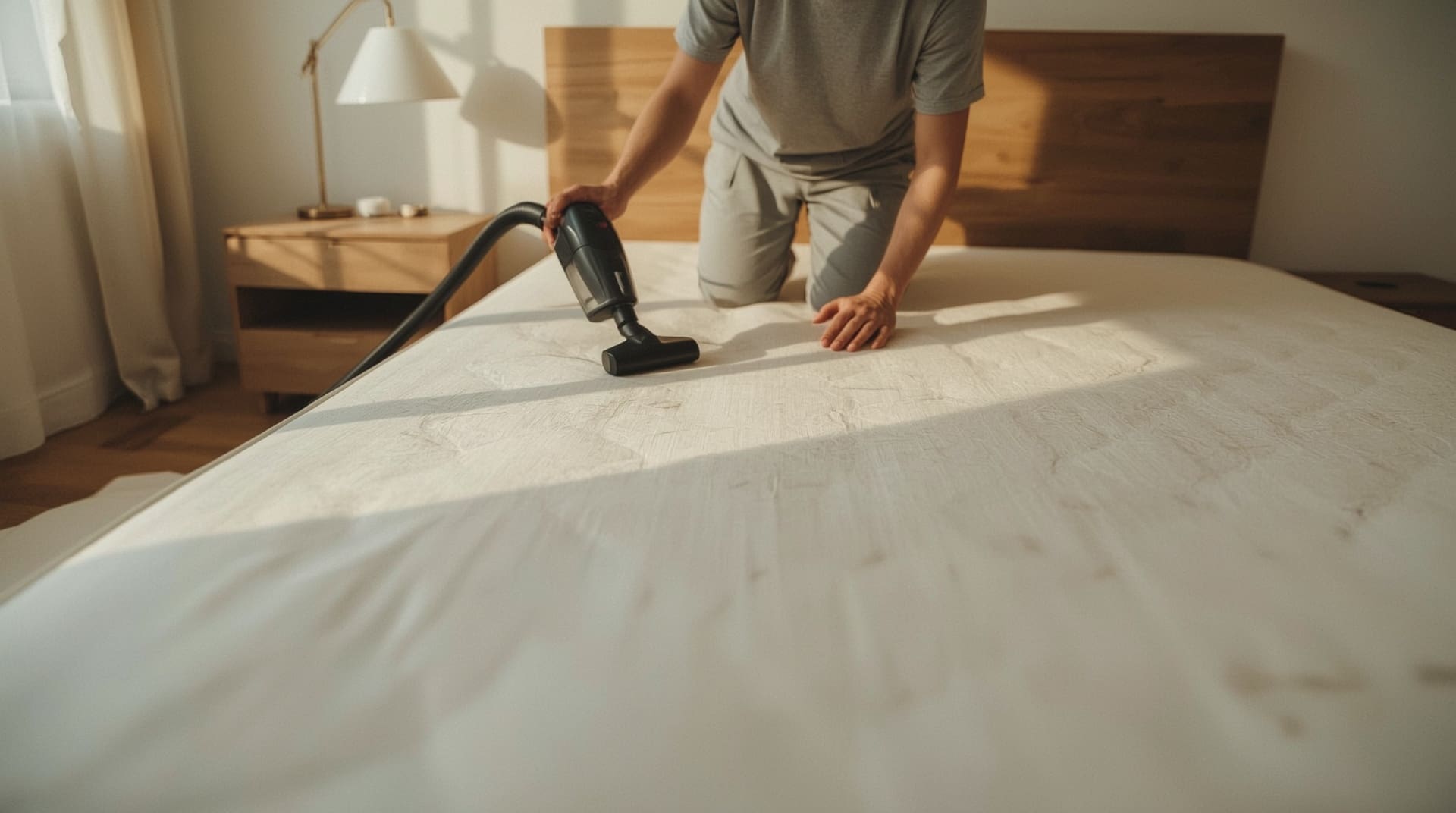
Remove all bedding, pillows, and mattress protectors and wash them separately. Washing your sheets in hot water kills dust mites that have accumulated over time.
Once the mattress is bare, run your vacuum’s upholstery attachment across every surface. Work in slow, overlapping strokes from top to bottom. Pay close attention to seams, edges, and tufted areas where dust, skin flakes, and allergens collect most heavily. Do not rush this step. A thorough vacuuming removes the bulk of the biological debris before you apply any liquid treatments.
How to Handle Mattress Stain Removal
Mattress stain removal depends on the type of stain you are dealing with. Different stains need different approaches, and using the wrong method can make things worse.
Fresh Liquid Stains
Act fast. Blot the area immediately with a clean dry cloth. Press firmly to absorb as much liquid as possible. Never rub, because rubbing pushes the stain deeper into the fabric and foam. Once you have blotted the excess, lightly mist the area with cold water and blot again. Repeat until the cloth comes away clean.
Urine Stains
Urine stains are protein-based, which means an enzyme cleaner works best. Spray the stained area generously and let it sit for 10 to 15 minutes. Enzyme cleaners break down the organic compounds in urine rather than just masking the smell. Blot dry, then sprinkle baking soda over the damp spot and leave it for several hours before vacuuming it away.
If you do not have an enzyme cleaner, mix one tablespoon of dish soap with two cups of cold water and a tablespoon of white vinegar. Apply with a cloth and blot clean.
Blood Stains
Blood requires cold water only. Even warm water will set the stain. Mix a small amount of dish soap or hydrogen peroxide with cold water. Apply a small amount to the stain and blot carefully. Hydrogen peroxide may cause slight lightening on darker fabric, so test a hidden corner first. Work from the outside of the stain toward the center to avoid spreading it.
Food and Drink Stains
For coffee, juice, or food spills, blot up as much as possible right away. Then apply a mixture of one teaspoon of dish soap, one tablespoon of white vinegar, and one cup of cold water. Work it gently into the stain with a cloth, then blot clean. For dried food stains, lightly dampen the area first to rehydrate the stain before treating it.
| Stain Type | Best Treatment | Water Temp |
|---|---|---|
| Urine | Enzyme cleaner or dish soap + vinegar | Cold |
| Blood | Dish soap or hydrogen peroxide | Cold only |
| Sweat / Body oils | Baking soda paste + vinegar spray | Cold |
| Food and drink | Dish soap + white vinegar solution | Cold to lukewarm |
How to Deodorize a Mattress Completely
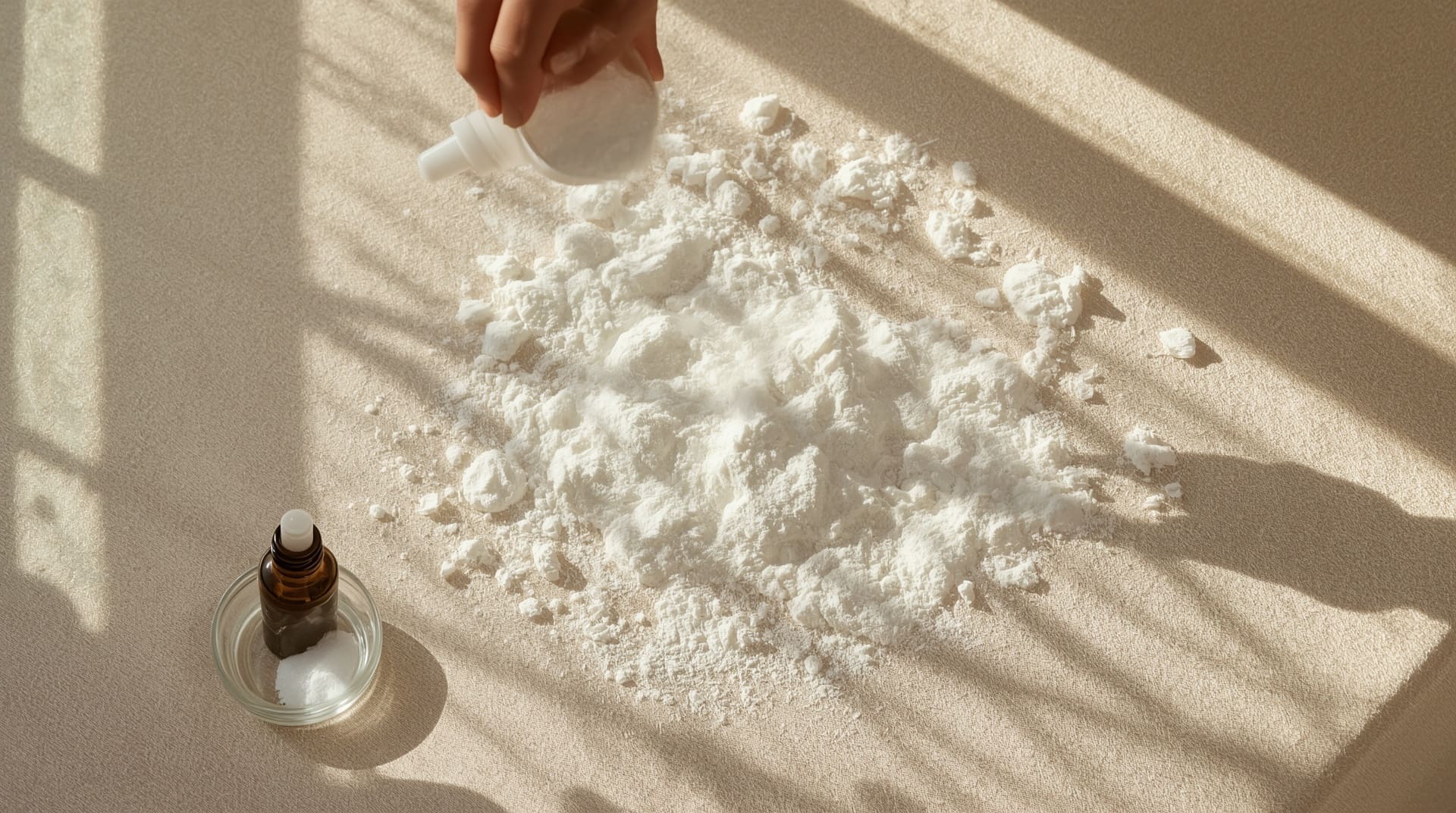
Even without visible stains, mattresses absorb sweat and body odor over time. Learning to deodorize your mattress is just as important as stain treatment, especially in a humid climate like Raleigh’s.
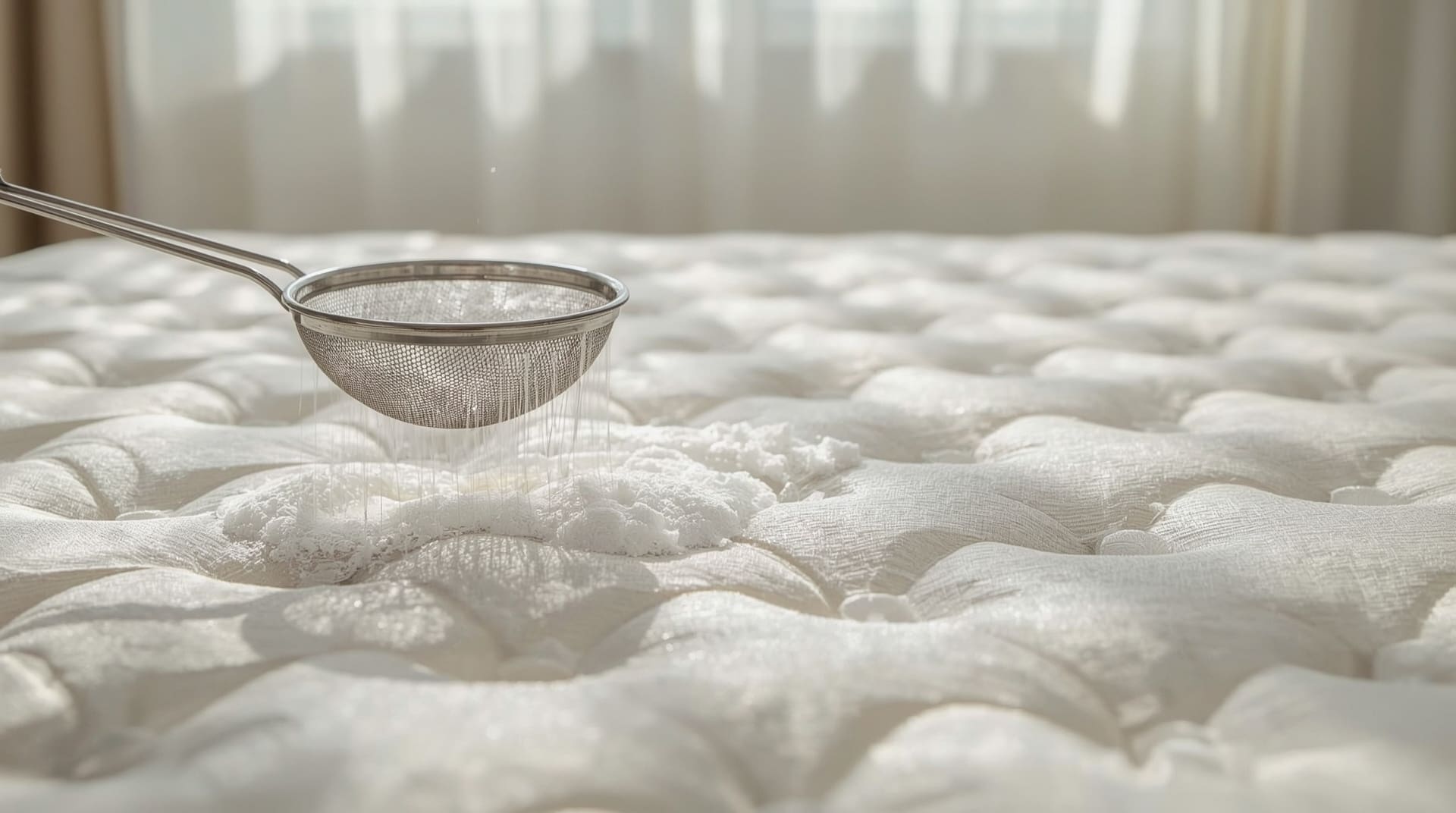
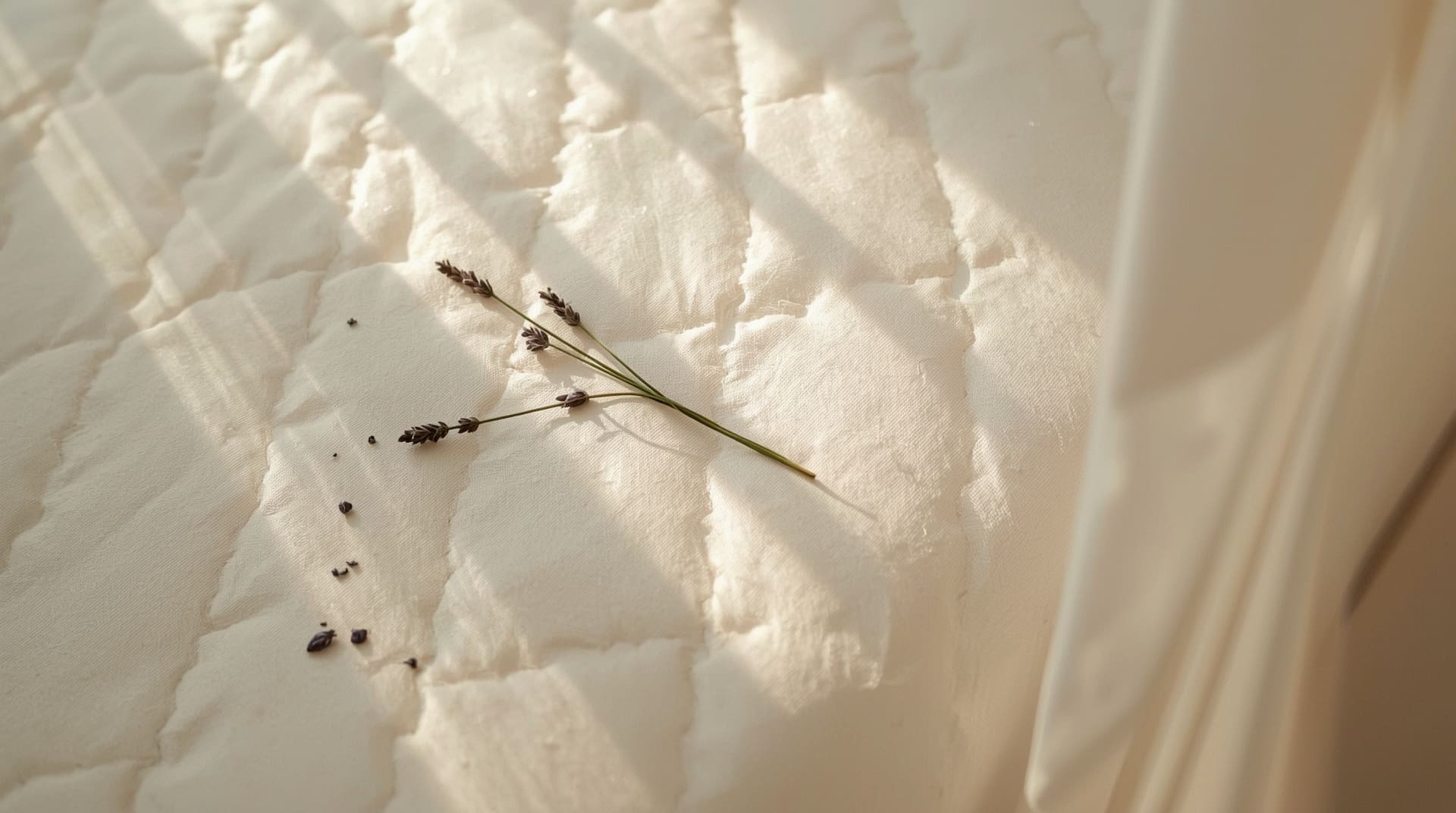
Baking soda is your best tool here. It is a natural odor absorber that pulls moisture and smell out of fabric without leaving a residue. Sprinkle a generous, even layer of baking soda across the entire top surface of the mattress. For extra freshness, mix five to ten drops of lavender or tea tree essential oil into the baking soda before sprinkling. Let it sit for a minimum of one hour, though two to four hours delivers noticeably better results.
Once the baking soda has done its job, vacuum the entire surface slowly and thoroughly. Flip or rotate the mattress and repeat the process on the other side if it is double-sided. The mattress should smell noticeably fresher once you are done.
Removing Allergens from Your Mattress
Dust mites are microscopic creatures that feed on dead skin cells. They are one of the most common indoor allergens and they thrive in mattresses, pillows, and upholstered furniture. If you wake up with a stuffy nose, itchy eyes, or sneezing, dust mites may be part of the problem.
To reduce allergens in your mattress, follow this approach:
- Vacuum every surface including the sides with an upholstery or HEPA-filter attachment
- Use baking soda and let it sit for several hours to absorb allergen-carrying moisture
- Expose the mattress to sunlight if possible, because UV light kills dust mites naturally
- Wash all bedding in hot water (at least 130°F) every one to two weeks
- Use an allergen-proof mattress cover after cleaning to create a barrier against future buildup
People in the Raleigh area deal with high pollen counts and humidity for much of the year. That combination accelerates allergen buildup in bedding and mattresses, making regular cleaning even more valuable for allergy sufferers.
How Often You Should Clean Your Mattress
Most experts recommend a full mattress cleaning every three to six months. However, certain situations call for more frequent attention.
- You or a family member has allergies or asthma: clean every one to two months
- You have pets that share the bed: clean monthly and use a mattress protector
- A spill or accident occurs: treat it immediately, do not wait
- You notice a stale or musty smell: deodorize right away
Building a regular mattress cleaning into your home maintenance routine is easy when it is part of a broader room-by-room schedule. Set a recurring reminder on your phone so it does not get skipped during busy seasons.
Tips for Keeping Your Mattress Clean Longer
Cleaning your mattress is more effective when you also protect it between cleanings. A few simple habits make a big difference in how long it stays fresh.
- Use a waterproof mattress protector: This is the single most effective way to prevent stains and reduce allergen buildup. Wash it monthly.
- Let your bed breathe each morning: Pull back the covers for 15 to 20 minutes before making the bed. This releases moisture and slows dust mite growth.
- Rotate your mattress every three months: This evens out wear and keeps one area from absorbing more body oils than another.
- Vacuum when you change the sheets: Adding a quick vacuum pass to your sheet-change routine takes five extra minutes and dramatically reduces dust accumulation.
- Keep food and drinks out of the bedroom: The simplest prevention for food stains is not allowing them near the mattress in the first place.
Final Thoughts on How to Clean a Mattress
Cleaning your mattress is not complicated, but it does require the right products and a bit of patience. Tackle stains with cold water and the appropriate cleaner, use baking soda to deodorize, and vacuum thoroughly to cut allergens. Done consistently every few months, this routine protects your investment and keeps your sleep environment genuinely healthy.
If your bedroom cleaning has gotten away from you or you simply want a professional touch, TruClean NC serves homeowners throughout the Raleigh area and surrounding communities. A cleaner bedroom starts with clean habits, and a clean mattress is one of the best habits you can build.
Frequently Asked Questions About How to Clean a Mattress
Can I use a steam cleaner on my mattress?
Steam cleaning can kill dust mites and sanitize the surface, but it introduces a lot of moisture into the mattress. If the mattress does not dry completely, mold and mildew can develop inside. Use a steam cleaner only if you have a way to dry the mattress thoroughly, such as placing it in direct sunlight or using fans in a well-ventilated room.
How do I get rid of yellow stains on a mattress?
Yellow stains are usually caused by sweat and body oils over time. Mix a paste of baking soda and a small amount of hydrogen peroxide, apply it to the stain, and let it dry fully before vacuuming. White vinegar sprayed lightly on the area before applying the paste can also help lift older discoloration. Repeat if needed for stubborn set-in yellowing.
Is it safe to spray vinegar directly on a mattress?
Yes, white distilled vinegar is safe for most mattress fabrics when used lightly. The key word is lightly. Over-soaking the mattress with any liquid can damage the foam inside and lead to mold growth. Spray a fine mist, blot with a clean cloth, and allow the mattress to air dry completely before putting sheets back on.
How long does a mattress take to dry after cleaning?
Drying time depends on how much moisture was used and the humidity in your home. In most cases, plan for two to four hours of drying time with windows open and a fan running. On humid days in North Carolina, it may take longer. Never put sheets back on a damp mattress, as trapped moisture breeds mold and odor.
Do mattress protectors really prevent allergens?
Yes, a good allergen-proof or dust mite-proof mattress protector creates a physical barrier between you and the debris inside the mattress. Look for protectors labeled “allergen barrier” or “dust mite proof” with a tight woven fabric. Wash the protector monthly in hot water to keep it effective. It is the easiest long-term investment you can make for your sleep health.