Your mattress absorbs sweat, dead skin cells, dust mites, and allergens every single night. Over time, that buildup affects your sleep quality, your breathing, and even how long the mattress lasts. Regular mattress cleaning is one of the simplest things you can do to protect your health and your investment.
This guide covers how often to clean your mattress, the tools and products that work best, and a step-by-step process you can follow at home. Whether you are dealing with a fresh spill or years of neglect, you will find clear answers here.
Ready to learn more? Explore our house cleaning services in Raleigh to see how a professional team can handle the deep work for you.
Why Mattress Cleaning Matters More Than You Think
Most people wash their sheets weekly but never think about the mattress underneath. That is a problem. The average person spends roughly a third of their life in bed, and the mattress collects what sheets cannot catch. Dust mites, tiny creatures invisible to the naked eye, feed on skin flakes and thrive in warm, humid sleeping environments.
A dirty mattress can trigger allergy symptoms, worsen asthma, and disrupt sleep. Children and older adults are especially sensitive to allergen exposure at night. Proper mattress care also prevents mold and mildew from forming inside the foam or spring layers, which can permanently damage the mattress.
How Often You Should Clean Your Mattress
A general mattress cleaning should happen at least every six months. If you have allergies, pets, or children, every three months is a smarter target. Spot cleaning should happen immediately whenever a spill or accident occurs.
| Cleaning Task | Recommended Frequency | Notes |
|---|---|---|
| Vacuum the surface | Monthly | Use upholstery attachment |
| Spot clean stains | Immediately after spills | Blot, never rub |
| Full surface deodorize | Every 3 to 6 months | Baking soda method works well |
| Deep clean mattress layers | Twice a year | Or after illness or major spills |
| Flip or rotate | Every 3 to 6 months | Check manufacturer guidelines first |
If someone in your home has been sick, clean the mattress as soon as they recover. Illness can leave behind bacteria and viruses that linger in fabric surfaces for days.
What You Need Before You Start
Gathering your supplies before you begin saves time and keeps the process moving. You do not need expensive products. Most of what works best is already in your home.
- Vacuum with upholstery attachment: This pulls dust, skin cells, and debris from the surface and seams.
- Baking soda: A natural deodorizer that draws moisture and odors from fabric.
- Cold water: Hot water can set protein-based stains like blood or sweat permanently.
- Mild dish soap or enzyme-based cleaner: Enzyme cleaners break down biological stains at the molecular level.
- Clean white cloths or paper towels: White only, so you can see what you are lifting from the surface.
- Spray bottle: For applying cleaning solution without saturating the mattress.
Avoid soaking the mattress with any liquid. Excess moisture trapped inside foam or springs leads to mold growth, which is very difficult to remove.
The Step-by-Step Process to Deep Clean Your Mattress

A full deep clean mattress routine takes about two to four hours from start to finish. Most of that time is passive waiting while baking soda works or the mattress dries. Plan to do this on a day when you do not need the bed until evening.
Step 1: Strip and Wash All Bedding
Remove all sheets, pillowcases, mattress covers, and pillow protectors. Wash them on the hottest setting the fabric allows. High heat kills dust mites and sanitizes the fabric. While the bedding washes, you can work on the mattress itself.
Step 2: Vacuum the Entire Surface
Use your vacuum’s upholstery attachment to go over the top, sides, and any tufted seams. Move slowly in overlapping strokes. Pay extra attention to the edges and the areas around buttons or stitching where debris collects. Do not skip the sides of the mattress.
Step 3: Treat Stains Before Deodorizing
Identify any stains and treat them before applying baking soda. For sweat or urine stains, mix one part cold water with one part white vinegar and a small amount of dish soap in your spray bottle. Lightly mist the stain, wait five minutes, then blot with a clean white cloth. Work from the outside of the stain inward to avoid spreading it. For protein stains like blood, use cold water only and an enzyme cleaner.
Step 4: Apply Baking Soda and Wait
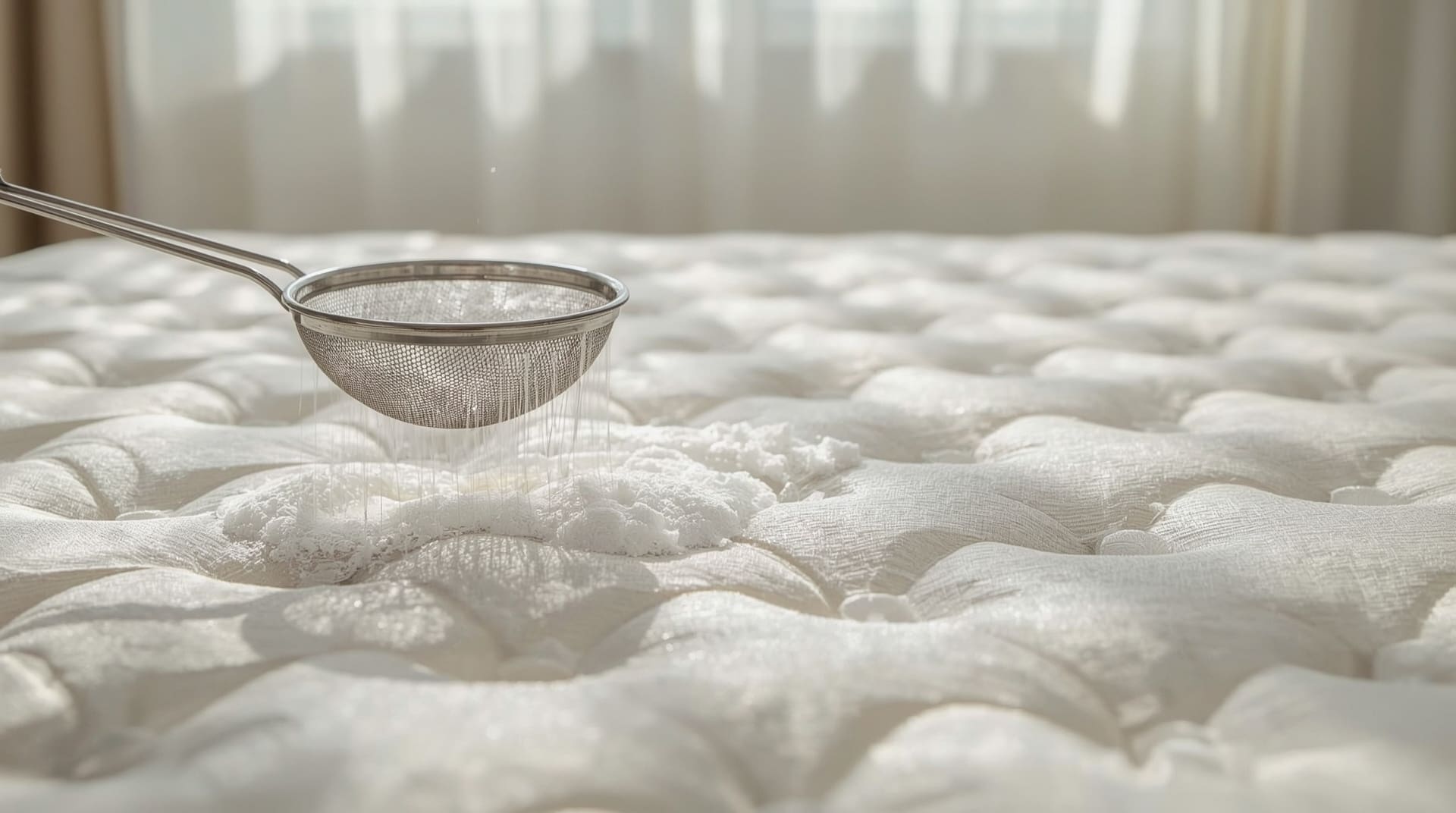
Sprinkle a generous, even layer of baking soda across the entire top surface of the mattress. For best results, let it sit for at least one hour. If you can leave it for eight hours or even overnight, the results will be noticeably better. The baking soda absorbs odors and pulls residual moisture from the fabric.
Step 5: Vacuum Again Thoroughly
Vacuum up all the baking soda using the same overlapping strokes from Step 2. Make sure you get into seams and tufted areas where baking soda tends to settle. After this pass, the mattress should smell fresh and feel clean to the touch.
Step 6: Air Out Before Remaking the Bed
Let the mattress air out for at least 30 minutes before putting any bedding back on. If weather allows, open a window or run a fan to speed up drying. Never remake the bed while the mattress is still damp from stain treatment.
Handling Common Stains the Right Way

Different stains need different approaches. Using the wrong method can make a stain permanent or push it deeper into the mattress foam.
Urine Stains
Act fast. Blot up as much liquid as possible with a dry cloth before applying any cleaning solution. An enzyme-based cleaner is your best tool here because it breaks down uric acid crystals, which cause the odor. After cleaning, sprinkle baking soda on the area and vacuum once dry. This two-step approach handles both the stain and the smell.
Blood Stains
Always use cold water on blood. Hot water cooks the protein and sets the stain forever. Apply a small amount of hydrogen peroxide to the stain, watch for a light fizzing reaction, and blot with a clean cloth. Repeat until the stain lifts. Do not saturate the area.
Sweat and Body Oil Stains
These show up as yellow or tan discoloration over time. A paste made from baking soda, salt, and cold water applied to the stain and left for 30 minutes works well. Scrape off the dried paste and blot the area with cold water. These stains rarely disappear completely, which is why a mattress protector is so valuable.
Food and Drink Spills
Blot up as much of the spill as possible first. Then use a solution of cold water and a small amount of mild dish soap. Spray lightly, blot repeatedly, and let the area dry fully before covering it.
Mistakes That Damage Your Mattress During Cleaning
Improper cleaning can cause more harm than good. These are the most common errors people make.
- Soaking the mattress: Excess moisture leads to mold inside the foam, which cannot be reversed.
- Using hot water on protein stains: Blood and urine stains set permanently with heat.
- Rubbing stains instead of blotting: Rubbing spreads the stain outward and pushes it deeper into fibers.
- Using bleach: Bleach degrades foam and fabric and can cause skin irritation during sleep.
- Skipping the drying step: Remaking a damp bed creates the perfect environment for mold and mildew.
- Using a steam cleaner without checking the manufacturer’s guidelines: Steam can void warranties and damage certain foam types.
Mattress Care Habits That Keep It Cleaner Longer
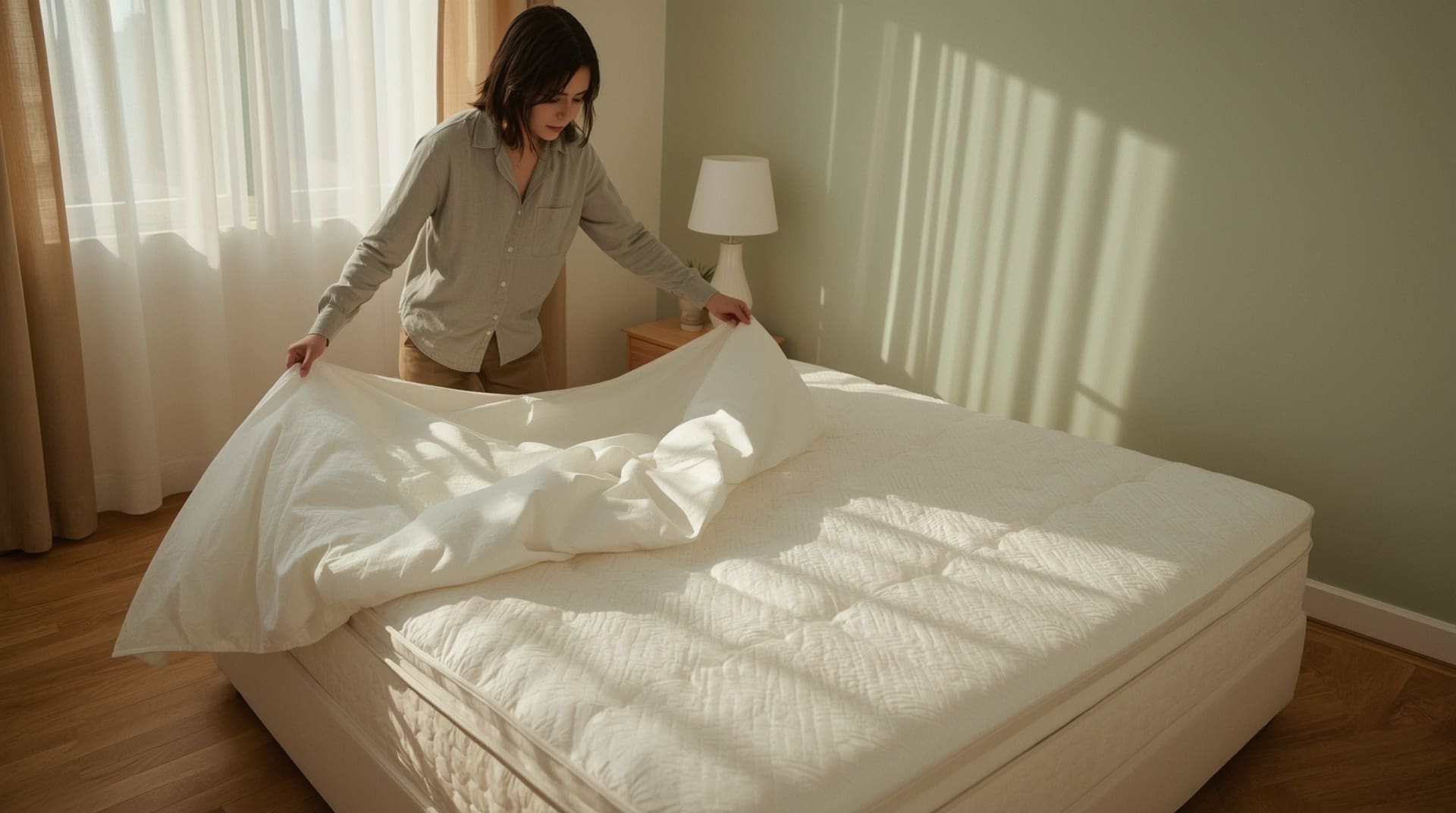
Cleaning your mattress twice a year is much easier when you build simple mattress care habits into your routine. These small steps reduce how much work each deep clean requires.
- Use a waterproof mattress protector: This single addition blocks sweat, spills, and allergens from reaching the mattress surface. Wash the protector monthly.
- Wash sheets weekly: Clean sheets reduce the volume of skin cells and oils that transfer to the mattress each week.
- Keep pets off the bed: Pet dander and hair accelerate allergen buildup and can introduce fleas or outdoor debris.
- Do not eat in bed: Food crumbs attract insects and mold spores over time.
- Allow the mattress to breathe: Pull back covers each morning for 15 to 20 minutes. This releases moisture built up during sleep.
- Rotate the mattress every three to six months: Even wear extends the life of the mattress and prevents permanent body impressions.
In the Raleigh area, humidity can be a real factor, especially in summer. A mattress protector and good airflow habits are especially important for preventing moisture-related damage in humid conditions.
When to Call a Professional Instead
Some situations go beyond what a DIY approach can handle. Knowing when to call a professional saves your mattress and your health.
If you see visible mold or mildew on the mattress surface or smell a persistent musty odor that baking soda does not remove, professional cleaning or replacement may be necessary. Mold inside a mattress is a health risk, and surface cleaning will not reach it. If someone with a compromised immune system or severe allergies sleeps on the mattress, a professional sanitation service can provide deeper results than home methods allow.
Professional cleaners have tools like commercial-grade hot water extraction equipment and UV sanitizing lights that are not available for home use. If you are considering a thorough refresh of your bedroom as part of a larger home clean, a professional house cleaning service can coordinate the full room as part of one visit.
The Health Benefits of a Consistently Clean Mattress
Regular mattress cleaning is directly connected to better health outcomes. Dust mite populations drop significantly when you vacuum and deodorize on a consistent schedule. Fewer dust mites means fewer allergens in the air you breathe while you sleep. For allergy and asthma sufferers, this can reduce nighttime symptoms and improve sleep quality noticeably.
A clean mattress also supports skin health. Sleeping on a surface free of oils, sweat residue, and bacteria reduces breakouts and skin irritation. For children, whose immune systems are still developing, a clean sleep surface matters even more. Building a solid mattress cleaning routine is one of the most impactful things you can do for your household’s overall wellness.
Final Thoughts on Mattress Cleaning
Mattress cleaning does not need to be complicated or time-consuming. A monthly vacuum, a twice-yearly deep clean, and a good waterproof mattress protector will keep your sleep surface fresh and extend its useful life by years. The key is consistency, not perfection.
Start with the basics: strip the bed, vacuum, treat stains, apply baking soda, and let everything dry completely. Build these steps into your regular home care schedule and your mattress will reward you with better sleep and fewer allergy flare-ups season after season.
Frequently Asked Questions About Mattress Cleaning
Can I use a steam cleaner on my mattress?
Some mattresses tolerate steam cleaning, but many foam types do not. Check your mattress manufacturer’s guidelines before using steam. High heat can break down foam layers and may void your warranty. If you want to sanitize with heat, a low-moisture steam setting and thorough drying time are essential.
How do I get rid of the musty smell in an old mattress?
Baking soda is the most effective home remedy for mattress odors. Apply a thick layer, let it sit for at least eight hours, and vacuum it up thoroughly. For persistent odors, a light mist of white vinegar followed by baking soda can help. If the smell persists after two treatments, the source may be mold inside the mattress, which requires professional attention or replacement.
Is it safe to sleep on a mattress right after cleaning it?
Only if it is completely dry. Any residual moisture can promote mold growth inside the mattress foam. After stain treatment, allow at least two to four hours of air drying with windows open or a fan running. When in doubt, wait longer before remaking the bed.
How long does a mattress last if cleaned regularly?
Most quality mattresses last between seven and ten years with normal use. Regular cleaning can extend that range by preventing moisture damage, mold, and the structural breakdown caused by oils and debris. A mattress protector combined with twice-yearly deep cleaning is the most effective way to maximize the mattress lifespan.
Do I need to clean both sides of the mattress?
If your mattress is double-sided and designed to be flipped, yes, you should clean both sides during your deep clean sessions. Most modern mattresses are single-sided with a designated top surface. Check your model’s guidelines. When you rotate a single-sided mattress, use that opportunity to vacuum the underside and the box spring or platform slats as well.